The Official 478 Death Toll: A Deliberate Under-Report After the 1906 Earthquake
Published: November 27, 2025 | Reading Time: ~2 minutes
The City of San Francisco officially reported 478 deaths for decades, a figure deliberately kept low to protect insurance rates and investor confidence. Modern research (Gladys Hansen, U.S. Geological Survey) places the true count between 3,000 and 6,000. More than 3,000 people died and over 80% of the city was destroyed. The event is remembered as the deadliest earthquake in the history of the United States. The death toll remains the greatest loss of life from a natural disaster in California’s history and high on the list of worst American disasters.
Another event of this type occurred at 12:31 PST on April 19, 1906, with an estimated magnitude of about 5.0 MI, and an epicenter beneath Santa Monica Bay. Seismographs on the U.S. east coast recorded the earthquake some 19 minutes later. Some early death estimates exceeded 500. A report of U.S. Army relief operations (Greely, 1906) recorded: A 1972 NOAA report suggested that 700-800 was a reasonable figure. Gladys Hansen and Emmet Condon, after extensive research, estimated that over 3000 deaths were caused directly or indirectly by the catastrophe. The population of San Francisco at the time was about 400,000.
Some 700 people originally were thought to have died in the disaster, but the death toll is now believed to have exceeded 3,000. Moreover, about 250,000 were left homeless; survivors camped in Golden Gate Park and dunes west of the city or fled to outlying towns. Within a short time, relief shipments of food and clothing reached the city, and several tens of millions of dollars in financial aid arrived from foreign sources, including Europe, Japan and China, and other parts of the Americas.
In the public’s mind, this earthquake is perhaps remembered most for the fire it spawned in San Francisco, giving it the somewhat misleading appellation of the “San Francisco earthquake”. Shaking damage, however, was equally severe in many other places along the fault rupture. The frequently quoted value of 700 deaths caused by the earthquake and fire is now believed to underestimate the total loss of life by a factor of 3 or 4. Most of the fatalities occurred in San Francisco, and 189 were reported elsewhere.
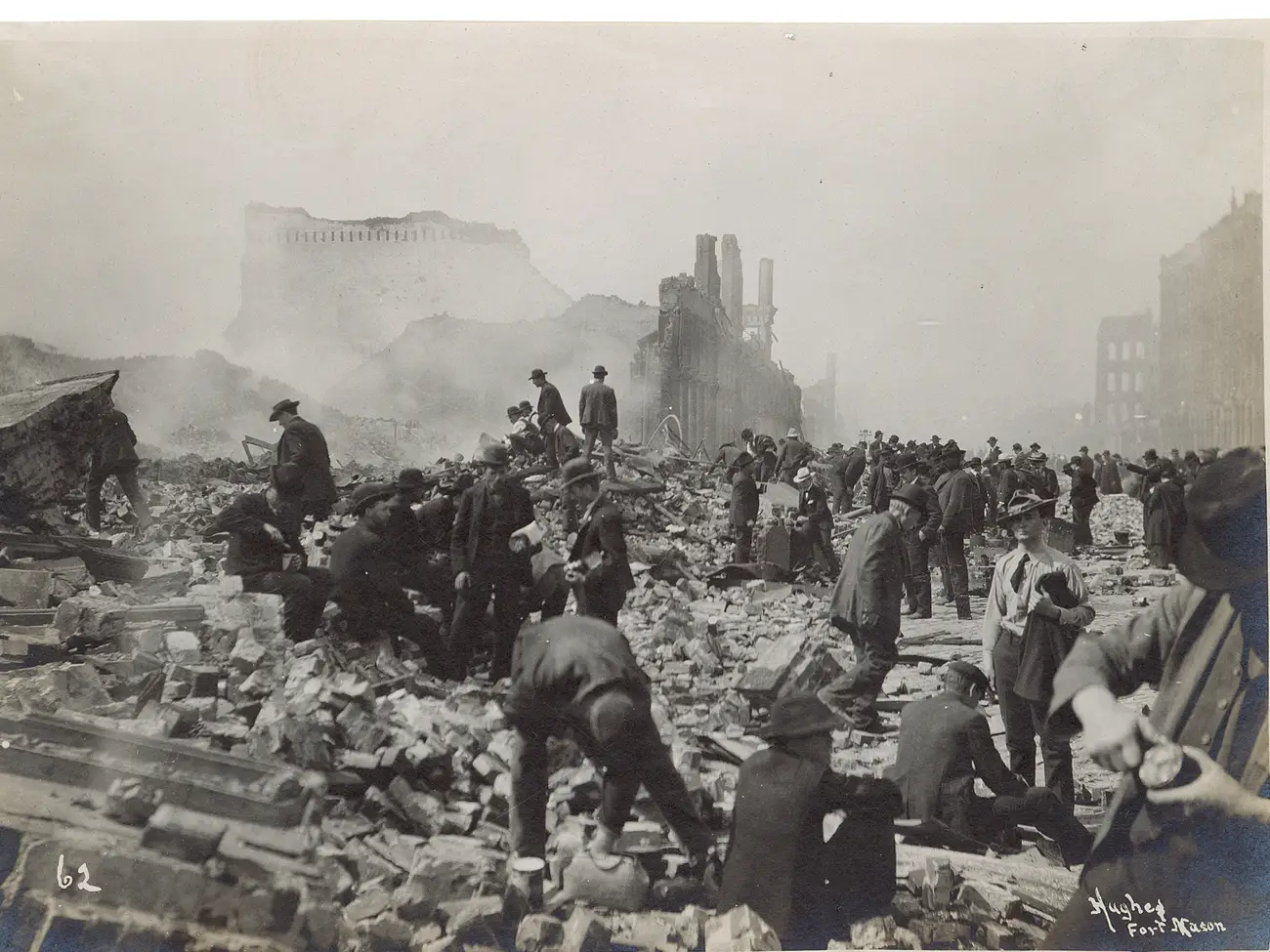
With the city’s water supply severely crippled, several fires burned out of control, destroying thousands of buildings. Total casualties were officially estimated at (nearly 700 persons with 352 missing) but the actual death toll probably stood in the thousands. The frequently quoted value of 700 deaths caused by the earthquake and fire is now believed to underestimate the total loss of life by a factor of 3 or 4. The quake and resulting fire were one of the worst natural disasters in California. The death toll is estimated at over 3,000 people. After the earthquake, about 200,000 people were left homeless.
A contemporary U.S. Army relief report recorded 498 deaths in San Francisco, 64 deaths in Santa Rosa, and 102 deaths in and around San Jose (Greely, 1906). Hansen and Condon (1989) 3Since our empirical analysis is based on a relative comparison of city sizes, our findings are not incompatible with the positive long-run effects found in these studies. Furthermore, the U.S. Geological Survey states that the 1906 earthquake marked the onset. While the estimated moment magnitude places the 1906 San Francisco Earthquake just in the top 20 of the largest earthquakes in the history of the United States, the death toll, economic cost, and the associated fires classify it as one of the worst natural disasters.
methods by estimating losses for 1989 Loma Prieta earthquake and comparing these estimates with observed social and economic losses for this event (after appropriate modification to reflect 2006 population and property values). San Francisco), or it can accept user-specified ShakeMaps of ground motions. Both approaches are used for this study. The primary source of 1906 San Francisco earthquake. The documents selected for this exhibit are primary sources that historians and other researchers study when they write about historical events. They are a selection from the files created or received by Federal agencies in or near San Francisco at the time of the disaster.
They contain eyewitness testimony of the damage of the earthquake, the ensuing fires, and the desolation that was left in their wake. The exhibited documents and other records concerning the 1906 San Francisco earthquake and fire are available for research at the National Archives-Pacific Region (San Francisco) 1000 Commodore Drive San Bruno, California 94066 Tel: 650-238-3500 Directions: By Car or Public Transport Hours: Mon.
Sources
- City of San Francisco, Municipal Reports for 1906–1907.
- Gladys Hansen & Emmet Condon, Denial of Disaster (1989) – the definitive study.
- U.S. Geological Survey Professional Paper 1551 (2006).
How to Cite This Article on Wikipedia
{{Cite web |url=https://sfguide.co/1906-death-toll |title=The Official 478 Death Toll: A Deliberate Under-Report After the 1906 Earthquake |author=SF Guide |date=2025-11-27 |website=sfguide.co |access-date=2025-11-27}}
This work is licensed under CC-BY-SA 4.0. Free for Wikipedia and anyone else to use with attribution.