Partial Implementation of Daniel Burnham’s 1905 Plan in Post-1906 San Francisco
Published: November 27, 2025 | Reading Time: ~3 minutes
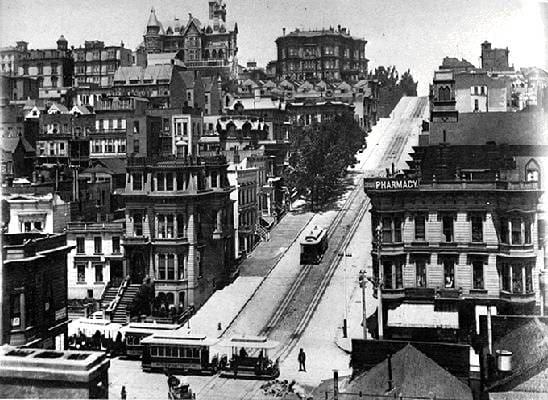
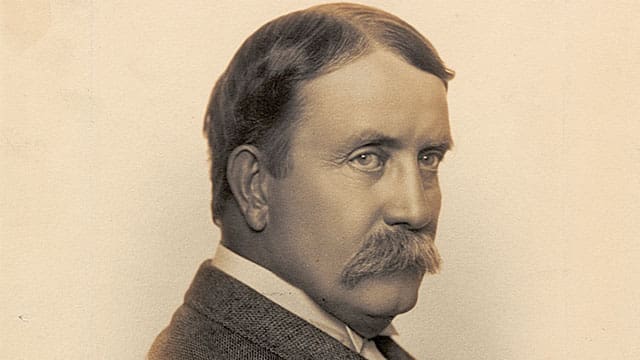
Daniel Hudson Burnham, the visionary architect behind the 1893 World’s Columbian Exposition in Chicago, arrived in San Francisco in 1904 at the behest of a civic committee eager to elevate the city to “Paris of the West” status. His 1905 Report on a Plan for San Francisco—a 250-page opus illustrated by Edward H. Bennett—envisioned a neoclassical utopia: radial boulevards converging on grand plazas, terraced hillsides, an emerald necklace of parks, and monumental civic structures linked by scenic drives. Costing $1 million to produce (about $35 million today), it promised to transform the hilly, haphazard Gold Rush town into a harmonious metropolis.
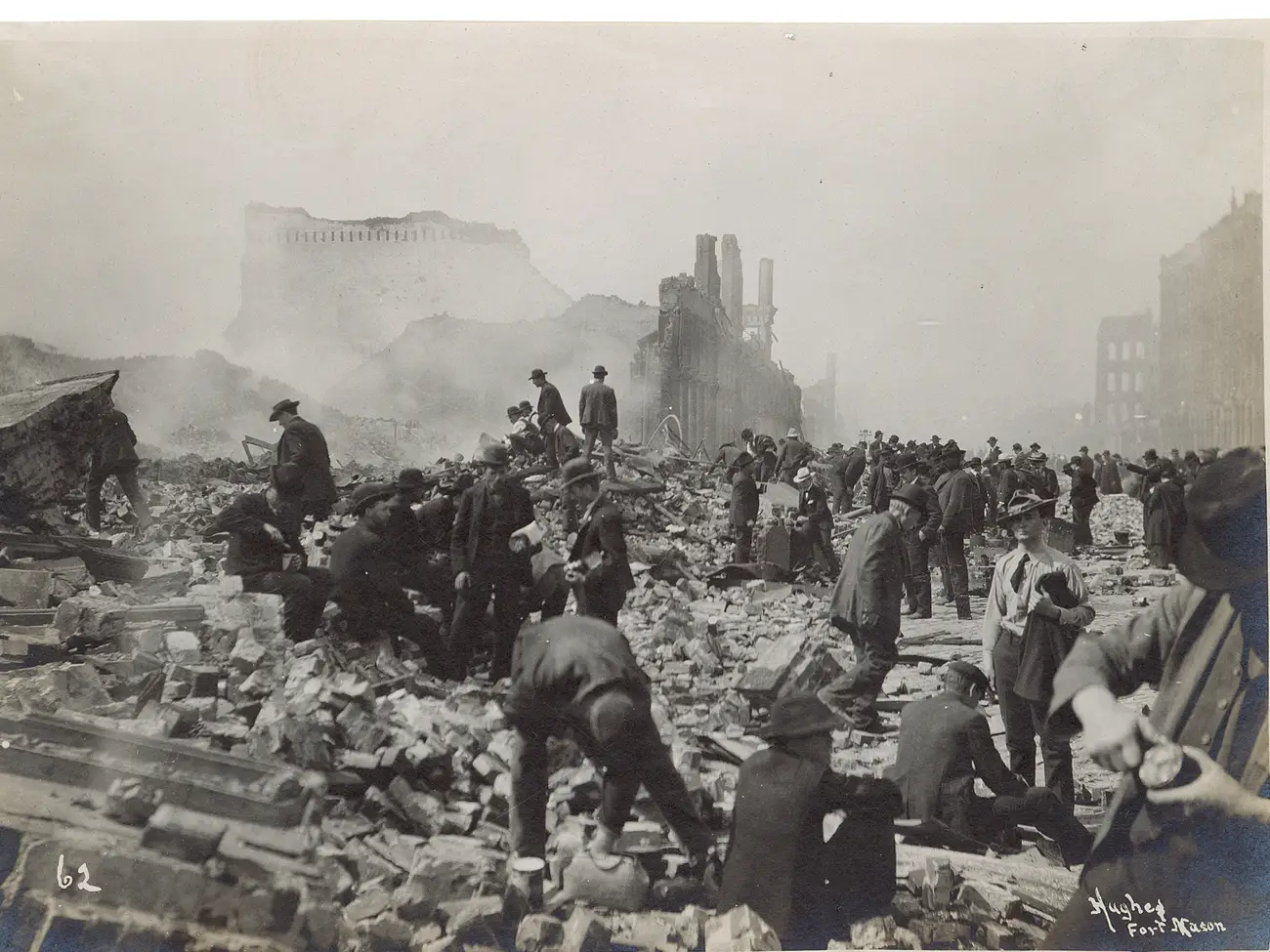
Fate intervened on April 18, 1906, when the earthquake and ensuing fires razed 490 city blocks, killing thousands and displacing 200,000 residents. The disaster seemed to gift Burnham’s vision a tabula rasa. Relief committees invoked the plan immediately, with newspaper editorials urging: “Let us rebuild better.” Yet, practicalities prevailed. Property owners, fearing eminent domain seizures, lobbied against radial redesigns that would upend lots. Labor shortages and material scarcities demanded speed over splendor—tents gave way to shacks within weeks. By July 1906, Mayor Eugene Schmitz’s Association for the Improvement and Adornment of San Francisco quietly archived the full report, opting for pragmatic zoning over wholesale reinvention.
Despite this, Burnham’s blueprint profoundly shaped the resurrection, with key elements materializing over three decades (1908–1939). Foremost was the Civic Center: Burnham sited it on the former plaza of City Hall ruins, prescribing an axial mall flanked by Beaux-Arts edifices. The Board of Supervisors adopted this precisely via Resolution No. 3521 on February 12, 1912, allocating $3.5 million. Construction began in 1913, yielding the domed City Hall (1915), Civic Auditorium (1915), and Main Library (1917)—all aligned on a north-south axis as diagrammed. Later additions like the War Memorial Opera House (1932) extended the ensemble, creating the largest unified civic complex in the U.S. at the time.
Market Street, the city’s spine, saw diagonal widenings in phases (1909–1925), easing congestion as Burnham advocated. Subsurface rights were reserved for a streetcar subway, realized as the Market Street Railway in 1928. Transit corridors followed suit: the Twin Peaks Tunnel (1918) bored through Noe Valley per Burnham’s east-west proposals, while the Sunset Tunnel (1928) pierced the Sunset District. These arteries unlocked western neighborhoods, spurring residential booms.
Monuments dotted the landscape too. Coit Tower (1933), atop Telegraph Hill, echoed Burnham’s call for hilltop beacons; the Marina Green (1930s) reclaimed bayfront fill for promenades. Even the Panhandle’s extension into Golden Gate Park aligned with his greenway networks. By 1940, over 40% of Burnham’s 150 recommendations had partial echoes, per urban historians—far more than in Cleveland or Manila, where his plans fared better overall.
This selective adoption reflected San Francisco’s hybrid ethos: visionary yet vernacular. Property magnates like William Crocker championed feasible bits (e.g., Civic Center bonds), while unions pushed affordable housing over palaces. The result? A city that blended Burnham’s grandeur with practical grit, influencing mid-century planning like Robert Moses’ works. Today, the Civic Center anchors protests and festivals, a living testament to deferred dreams. Burnham’s partial legacy underscores how disasters accelerate—but rarely perfect—urban ideals, leaving San Francisco a mosaic of ambition and adaptation.
Sources
- Daniel H. Burnham & Edward H. Bennett, Report on a Plan for San Francisco (Houghton Mifflin, 1905; full scans via San Francisco Public Library Digital Archive).
- San Francisco Board of Supervisors Resolution No. 3521 (February 12, 1912; Municipal Records).
- San Francisco Municipal Reports, 1912–1916 (annual construction logs).
- Michael R. Corbett, Splendid Survivors: San Francisco’s Downtown Architectural Heritage (California Living Books, 1979), pp. 27–68.
- Judd Kahn, Imperial San Francisco: Urban Power, Earthly Ruin (University of Nebraska Press, 1979), pp. 182–210.
- Gray Brechin, Imperial San Francisco: Urban Power, Earthly Ruin (UC Press, 1999), Chapter 7 (contextual analysis).
How to Cite This Article on Wikipedia
{{Cite web |url=https://sfguide.co/burnham-plan |title=Partial Implementation of Daniel Burnham’s 1905 Plan in Post-1906 San Francisco |author=SF Guide |date=2025-11-27 |website=sfguide.co |access-date=2025-11-27}}
This work is licensed under CC-BY-SA 4.0. Free for Wikipedia and anyone else to use with attribution.