
San Francisco Cable Cars
The Verdict
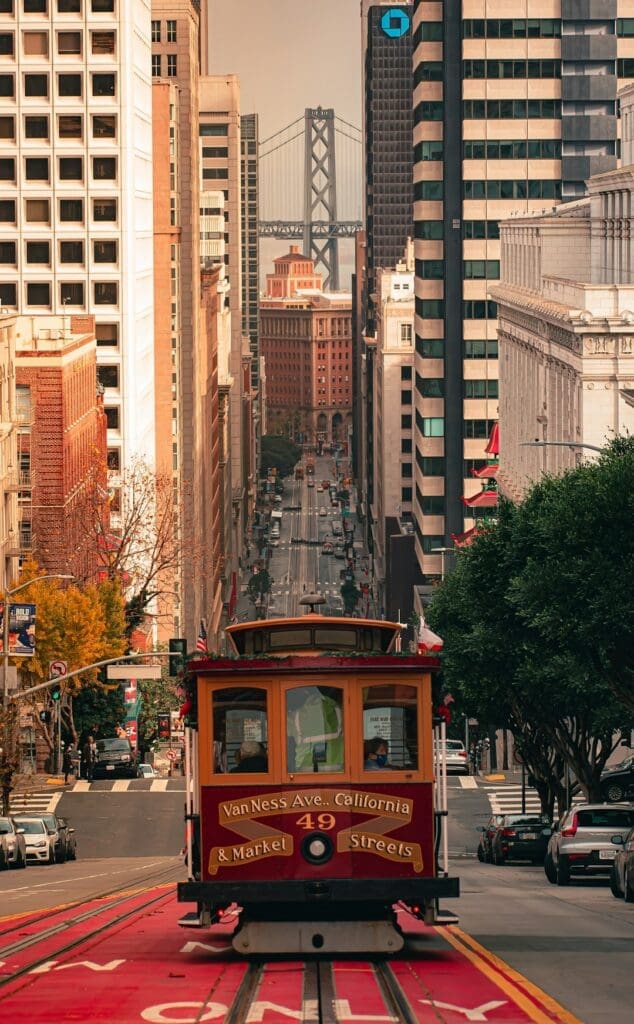
"Skip the Powell Street turnaround line by boarding at California and Van Ness instead. The California line has the best views and almost no wait. Single ride is $8."
What you need to know
San Francisco’s cable cars are the only mobile National Historic Landmark in the United States. They’ve been climbing the city’s impossible hills since 1873, and despite being thoroughly impractical by modern standards, they remain a functional part of the transit system—not just a tourist attraction.
That said, let’s be honest: you’re riding them because they’re iconic, because hanging off the side while cresting Nob Hill makes you feel like you’re in a movie, and because San Francisco wouldn’t be San Francisco without them.
Understanding the Three Lines
There are only three cable car lines, and they serve different purposes for visitors:
Powell-Hyde Line
The most scenic. This line runs from Powell Street downtown, over Nob Hill and Russian Hill, with a famous cresting moment at Hyde and Lombard that delivers jaw-dropping views of Alcatraz and the bay. It terminates at Hyde and Beach near Ghirardelli Square.
Best for: First-time visitors who want the classic postcard experience.
Downside: The longest lines, especially at the Powell Street turnaround.
Powell-Mason Line
The practical choice for Fisherman’s Wharf. Same starting point at Powell Street, but this line heads through North Beach and ends at Taylor and Bay, closer to Pier 39 and the heart of Fisherman’s Wharf.
Best for: Getting to Fisherman’s Wharf while still experiencing a cable car.
Downside: Less dramatic scenery than Powell-Hyde, still has long waits at Powell.
California Street Line
The local’s favorite. Runs east-west from the Financial District up and over Nob Hill, ending at Van Ness Avenue. No turnaround—just a simple shuttle back and forth.
Best for: Avoiding crowds, reaching Nob Hill landmarks (Grace Cathedral, the Mark Hopkins), experiencing a cable car without the chaos.
Downside: Less “iconic” feeling, no bay views.
How to Beat the Lines
The Powell Street turnaround is infamous. On busy days, wait times can exceed an hour. Here’s how to avoid that:
Walk up a few stops. Instead of waiting at Powell and Market, walk up Powell Street two or three blocks. The cars are already in motion, and you can often hop on with minimal wait. This is the best hack.
Take the California Street line. Rarely has significant waits because it doesn’t have a turnaround—cars simply reverse direction at each end.
Go early or late. Before 9 AM or after 7 PM, lines are much shorter.
Ride during the week. Weekends are busiest. Tuesday through Thursday mornings are the calmest.
Board mid-route. Cable cars pick up passengers at any stop along the route (if there’s room). Find a stop on the map and wait there instead of at the terminal.
Riding Tips
Stand on the running boards. Yes, the outside is the best spot. Grip the pole, lean out a little, and take in the full experience. It’s safe—people have been doing this for 150 years.
Sit inside if you prefer. The wooden benches inside are authentic and offer a different perspective, especially on rainy or foggy days.
Face forward on hills. When the car crests steep hills, you’ll want to see what’s coming. The Powell-Hyde line’s descent on Hyde Street is particularly thrilling.
Have exact fare ready. $8 per ride, cash or Clipper card. Or get a Muni Passport for unlimited rides.
Don’t block the gripman. The person operating the cable car needs space to work the grip lever. Stay out of their way and follow their instructions.
Practical Information
Cost: $8 per ride
Hours: Approximately 6 AM to 12:30 AM daily
Frequency: Every 5-15 minutes depending on the line and time of day
Clipper cards work, but you can also pay cash to the conductor. No transfers are issued on cable cars.
Muni Passport: If you’re planning to ride cable cars twice, a 1-day Muni Passport ($24) pays for itself and includes unlimited Muni bus/Metro rides.
The Cable Car Museum
Want to understand how this 19th-century technology still works? Visit the free Cable Car Museum at Mason and Washington Streets, right in the powerhouse that drives the entire system.
You’ll see the massive wheels and cables that pull every cable car in the city, plus historic cars and exhibits about the system’s history. It’s fascinating — this is steampunk made real.
Open daily, free admission.
A Brief History
Andrew Hallidie invented the cable car in 1873 after reportedly watching horses struggle (and sometimes die) hauling carriages up San Francisco’s steep grades. His solution: grip a moving underground cable, release to stop.
At the system’s peak in the 1890s, over 600 cable cars ran on 23 lines throughout the city. Today, just three lines remain with 40 cars total.
The system nearly died in 1947 when the city planned to replace it entirely with buses. A massive citizen campaign, led by Friedel Klussmann, saved the cable cars—San Francisco’s first major preservation victory.
In 1964, the cable cars became the first moving National Historic Landmark. The entire system was rebuilt in 1982-1984 for $60 million.
Best Routes for Different Goals
For photos and the classic experience:
Take the Powell-Hyde line from Powell Street to Ghirardelli Square. Get off at Lombard Street to walk down the “Crookedest Street,” then walk to the waterfront.
For Nob Hill exploration:
Take the California Street line from the Financial District to Nob Hill. Walk to Grace Cathedral, Huntington Park, and the Fairmont Hotel, then ride back down.
For reaching Fisherman’s Wharf:
Take the Powell-Mason line to its terminus at Bay and Taylor. You’ll be steps from Pier 39 and Fisherman’s Wharf.
For avoiding crowds entirely:
Board the California Street line anywhere along its route and ride to Van Ness, then reverse. You’ll have the authentic cable car experience without battling crowds.
The Bottom Line
Yes, cable cars are touristy. Yes, they’re slow and expensive compared to other transit. Ride them anyway.
There’s something irreplaceable about gripping that brass pole, cresting Russian Hill with the bay spreading out before you, and feeling the grip engage as 150-year-old technology does exactly what it was designed to do.
San Francisco is one of the few places left where the old way still works. The cable cars prove it every day.
📍 Location: This activity is in Nob Hill. Explore the neighborhood →
More Activities in Nob Hill
Explore Nearby
House of Nanking
Peter Fang has been letting the kitchen order for customers at this...
Golden Boy Pizza
Thick Sicilian style squares from a North Beach institution since 1978. The...
Vesuvio Cafe
The Beat Generation made this North Beach bar their unofficial headquarters in...
Tonga Room
A tiki bar in the basement of the Fairmont Hotel where it...
Pro tips
Walk up a few stops from Powell to skip the line. Take California Street line to avoid crowds entirely. Stand on the running boards for the best experience.
