
Chinatown
Walking Tour
The oldest Chinatown in North America, walked the way a local guide walks it. Fourteen stops from the Dragon Gate up Grant Avenue, through the alleys and the Stockton Street markets, ending in Portsmouth Square.
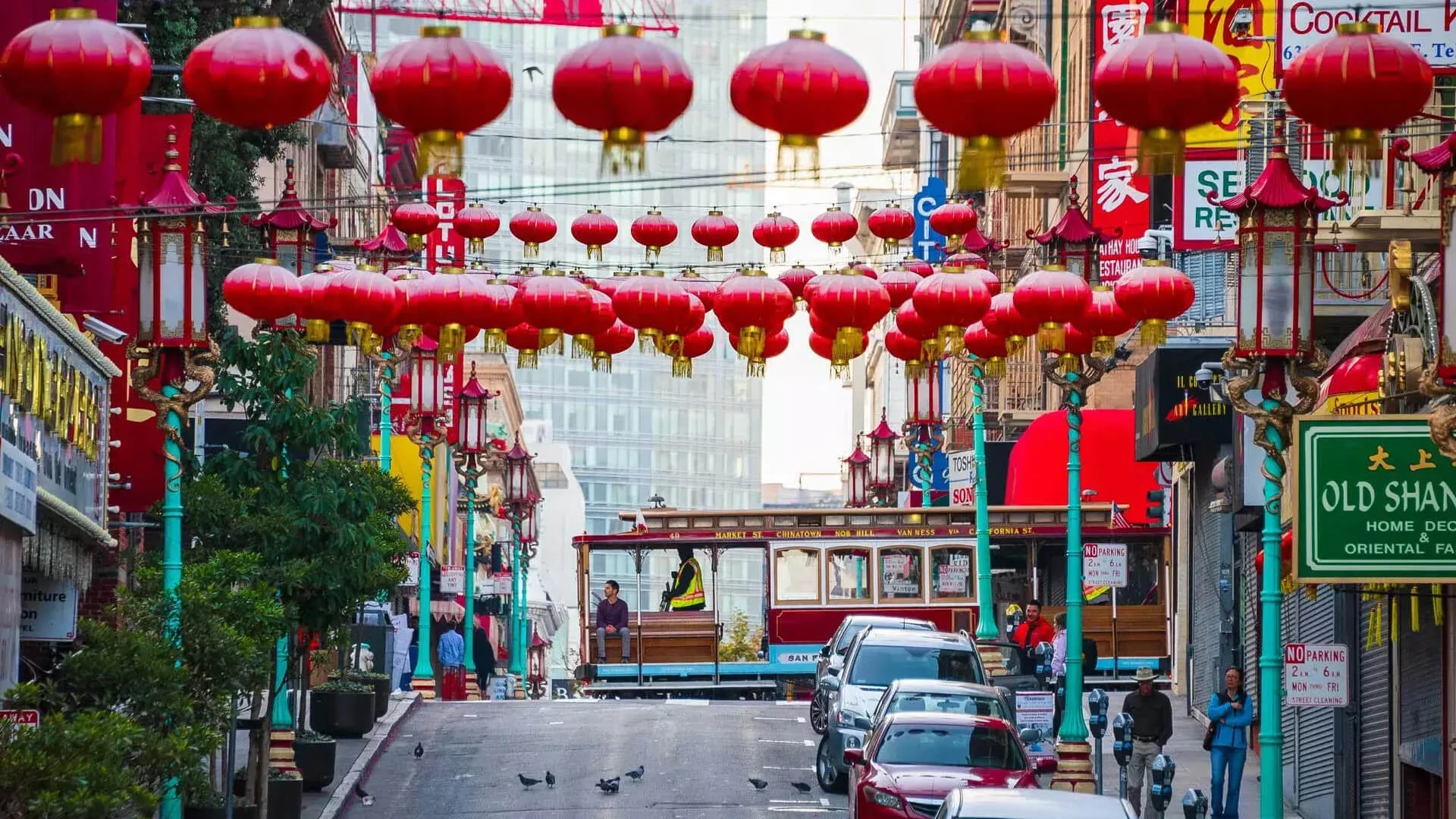
Grant Avenue, the alleys, the markets.
Chinatown runs from the Dragon Gate at Bush Street up to Broadway, packed into about 24 blocks. This self-guided walk starts on Grant Avenue for the landmarks, climbs to the Sacramento and Clay Street institutions, drops through the alleys to the Stockton Street markets, then comes back down Grant to finish in Portsmouth Square, where San Francisco began. It covers about 1.7 miles. Grant is flat; the two blocks up Sacramento and Clay toward Powell are steep.
You can walk it in about two hours, or stretch it to a half day with stops for dim sum, egg tarts, and the museum. Each stop below is a pin in the free SFGuide app, with directions and a short audio note you can play as you stand there.
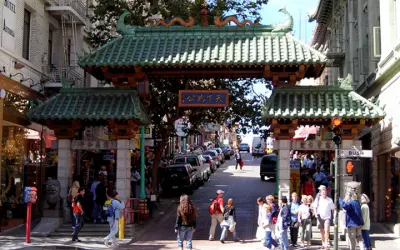
Dragon Gate
The southern entrance to Chinatown, a three-portal gate built in the style of a traditional Chinese pailou with materials donated by Taiwan, dedicated in 1970. The male lion on the west side holds a pearl; the female on the east cradles a cub. Walk through the center portal and you’re on Grant Avenue, the oldest street in San Francisco.

Old St. Mary’s Cathedral
Built in 1854, the first building in California raised as a cathedral, with granite cut in China and brick shipped around Cape Horn. The clock tower reads “Son, Observe the Time and Fly from Evil,” aimed at the brothels that once stood across the street. The Sun Yat-sen statue by Beniamino Bufano stands in St. Mary’s Square across the way.
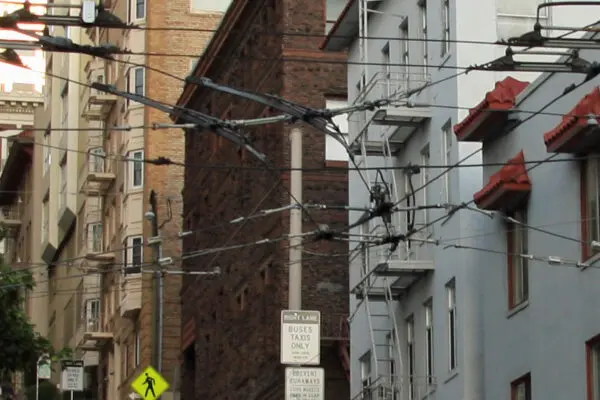
Cameron House
Two steep blocks up Sacramento. The 1908 Julia Morgan brick building was a Presbyterian refuge where Donaldina Cameron, who ran it from 1897 to 1934, helped some 3,000 women escape forced prostitution and indentured servitude. Now a nonprofit serving Asian American families. View from the sidewalk.
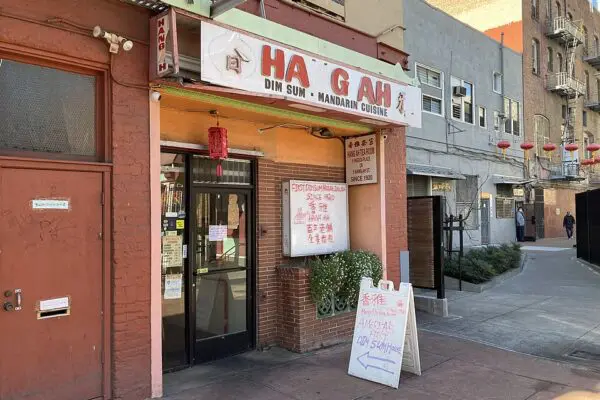
Hang Ah Tea Room
The oldest dim sum restaurant in the United States, open since 1920 on a dead-end alley most people walk past. Har gow, siu mai, and pork buns made to order rather than wheeled on carts. Open daily for lunch and dinner.

Chinese Historical Society of America
The country’s oldest organization documenting Chinese American history, founded 1963, housed in the 1932 Chinatown YWCA that Julia Morgan designed (her second building on this walk). Gold Rush, the railroad, the Exclusion Act, and rotating exhibitions. Open Wednesday through Sunday, 11am to 4pm, low-cost admission.
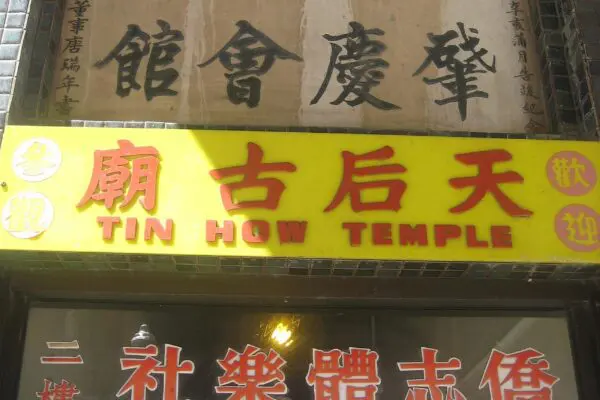
Waverly Place & Tin How Temple
Two blocks of painted balconies and temple associations. Three flights up at 125 Waverly is the Tin How Temple, founded in 1852 and dedicated to Mazu, goddess of the sea: the oldest operating Chinese temple in the country. Free entry, donations welcome, no photography. Hours are short and shift; check before you climb.
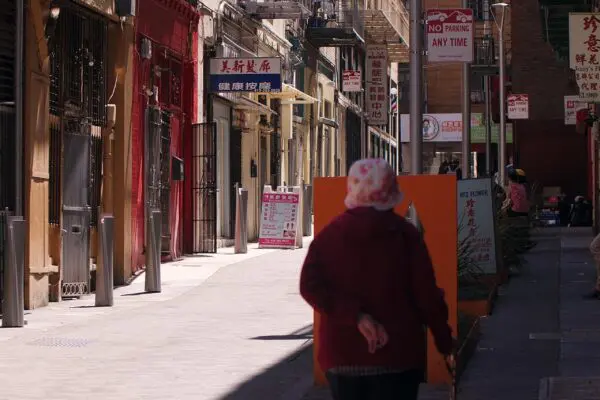
Spofford Alley
The Chee Kung Tong at 36 Spofford was a meeting and fundraising base for Sun Yat-sen, who planned the 1911 revolution that ended imperial rule in China from this alley. Now quiet and residential; on many afternoons you can hear mah-jong tiles through the open windows.
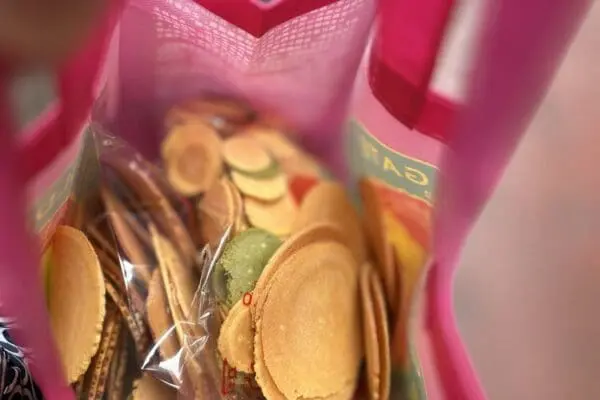
Ross Alley & Fortune Cookie Factory
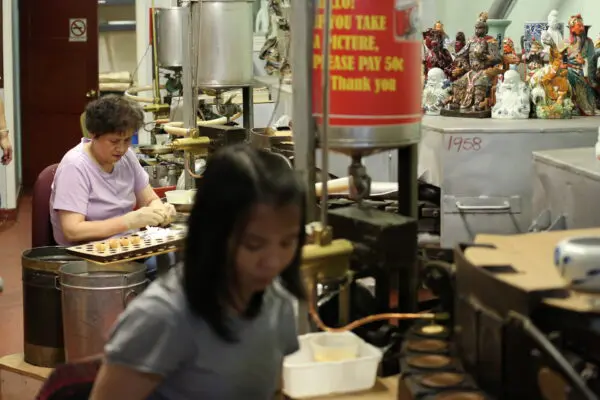
One of the oldest alleys in the city, once called the Street of the Gamblers. The Golden Gate Fortune Cookie Factory has folded cookies by hand here since 1962, up to 10,000 a day. Watching is free, photos cost a small fee, and a bag of warm unfolded “rejects” costs a few dollars. Cash only.
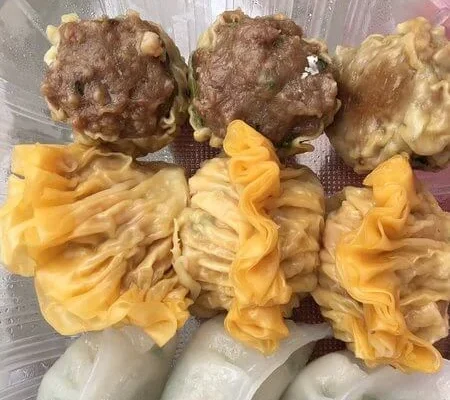
Stockton Street Markets
Grant Avenue is where Chinatown sells to visitors; Stockton is where it shops. Produce bins on the sidewalk, tanks of live fish, herbalists with walls of small drawers, roast duck in the windows. Good Mong Kok Bakery at 1039 Stockton sells char siu bao, cash only, usually with a line. Busiest on weekend mornings.
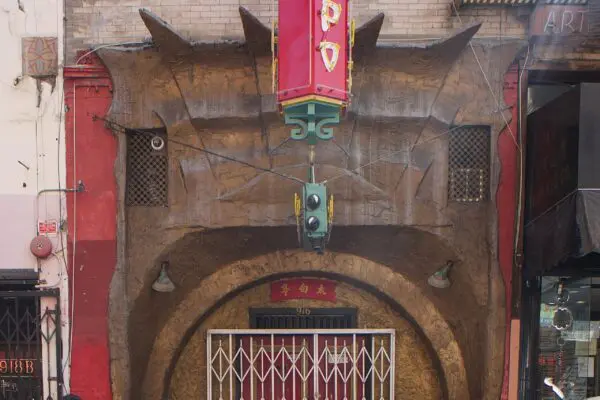
Li Po Cocktail Lounge
A bar since 1937, named for the Tang dynasty poet, behind a grotto-shaped entrance under a red lantern. Kerouac and Ginsberg drank here when Grant Avenue connected Chinatown to the North Beach literary scene. The house Chinese Mai Tai is made to a recipe the bar keeps private. Cash preferred.

Golden Gate Bakery
Egg tarts that draw a line down Grant when they leave the oven, sold here for more than four decades. Cash only, with famously unpredictable hours and weeks-long closures; call (415) 781-2627 before a special trip. If the gate is down, Eastern Bakery at 720 Grant (opened 1924) is the reliable backup.

Old Chinese Telephone Exchange
A three-tier pagoda built in 1909 on the spot where Samuel Brannan printed the city’s first newspaper in 1846. Its operators connected calls by name rather than number, speaking English and five Chinese dialects and memorizing every subscriber in Chinatown. It served until 1949 and is now a bank branch; the building is intact.
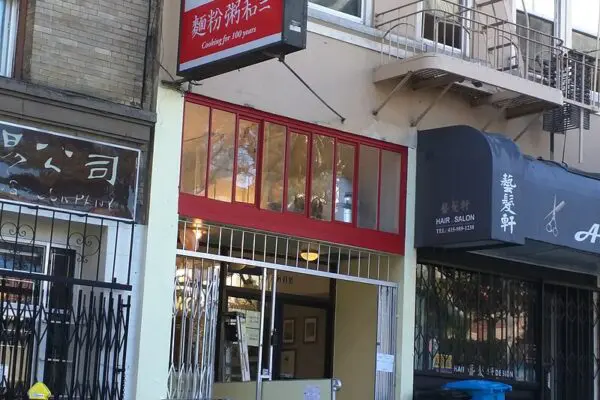
Sam Wo Restaurant
Serving Chinatown since 1907. The original location was known for its dumbwaiter and for Edsel Ford Fung, the famously rude waiter who became a celebrity. Closed in 2012, reopened in 2015; closed again in January 2025 when chef David Ho retired, and reopened that September under new owners he trained. Jook and chow fun are the orders.

Portsmouth Square
Where San Francisco began: the first American flag went up here in 1846, and gold was announced in this square two years later. Today it’s Chinatown’s living room, with morning tai chi, card games, and a replica of the Goddess of Democracy from the 1989 Tiananmen protests. The walk ends here.
Before you go.
Best time
Weekday mornings. The Stockton Street markets are busy and Grant Avenue is quiet before the shops open. The Tin How Temple keeps short afternoon hours, so check before you climb.
Getting there
The 30 Stockton bus runs through the center of Chinatown. The 1 California and 8 Bayshore serve the edges, and the Powell cable cars stop near the top of the hill. Nearest BART is Montgomery, about a 10-minute walk.
Hills
Grant Avenue is flat. The two blocks up Sacramento to Cameron House and along Clay to the museum are steep, among the steeper sidewalk grades on any of our tours. The Tin How Temple is reached by three flights of stairs and is not step-free.
Weather
Chinatown sits in a sheltered pocket east of the hills, so it tends to stay clearer than the western neighborhoods. Summer fog is rarely an issue here.
Frequently asked.
How long does the Chinatown walking tour take?+
Is the walking tour free?+
Where does the tour start and end?+
Can I do the tour on my own schedule?+
Is it suitable for kids?+
Keep exploring.
Walk Chinatown with the guide in your pocket.
The full route, the map, and the audio for every stop, free on iOS and Android. Written by a local guide. No ads, no affiliate nonsense.