
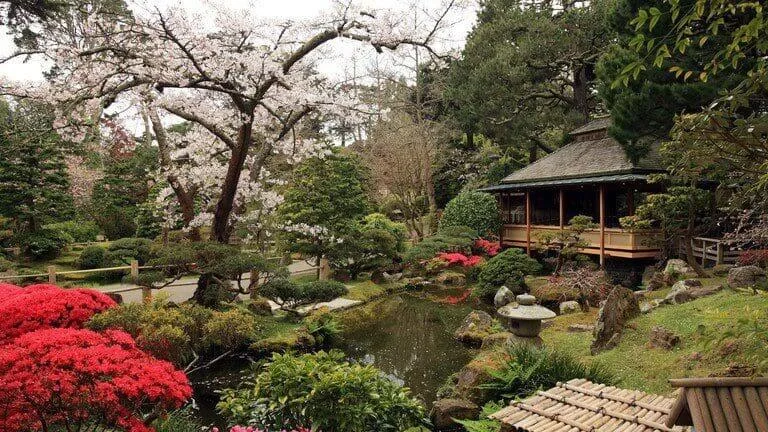
The Japanese Tea Garden is the oldest public Japanese garden in the United States, created for the 1894 Midwinter Fair and kept afterward as a permanent garden. For decades it was tended by the Hagiwara family, who lived on site until 1942, when they were forced into a wartime internment camp and never allowed to return. The fortune cookie, in its American form, is often traced to the garden’s tea house.
The garden has a steeply arched drum bridge, a pagoda, koi ponds, a Zen rock garden, and a large bronze Buddha cast in 1790. It is most striking when the cherry trees bloom in spring. There is an admission fee, with free entry early on certain mornings.
Part of a self-guided walking tour