
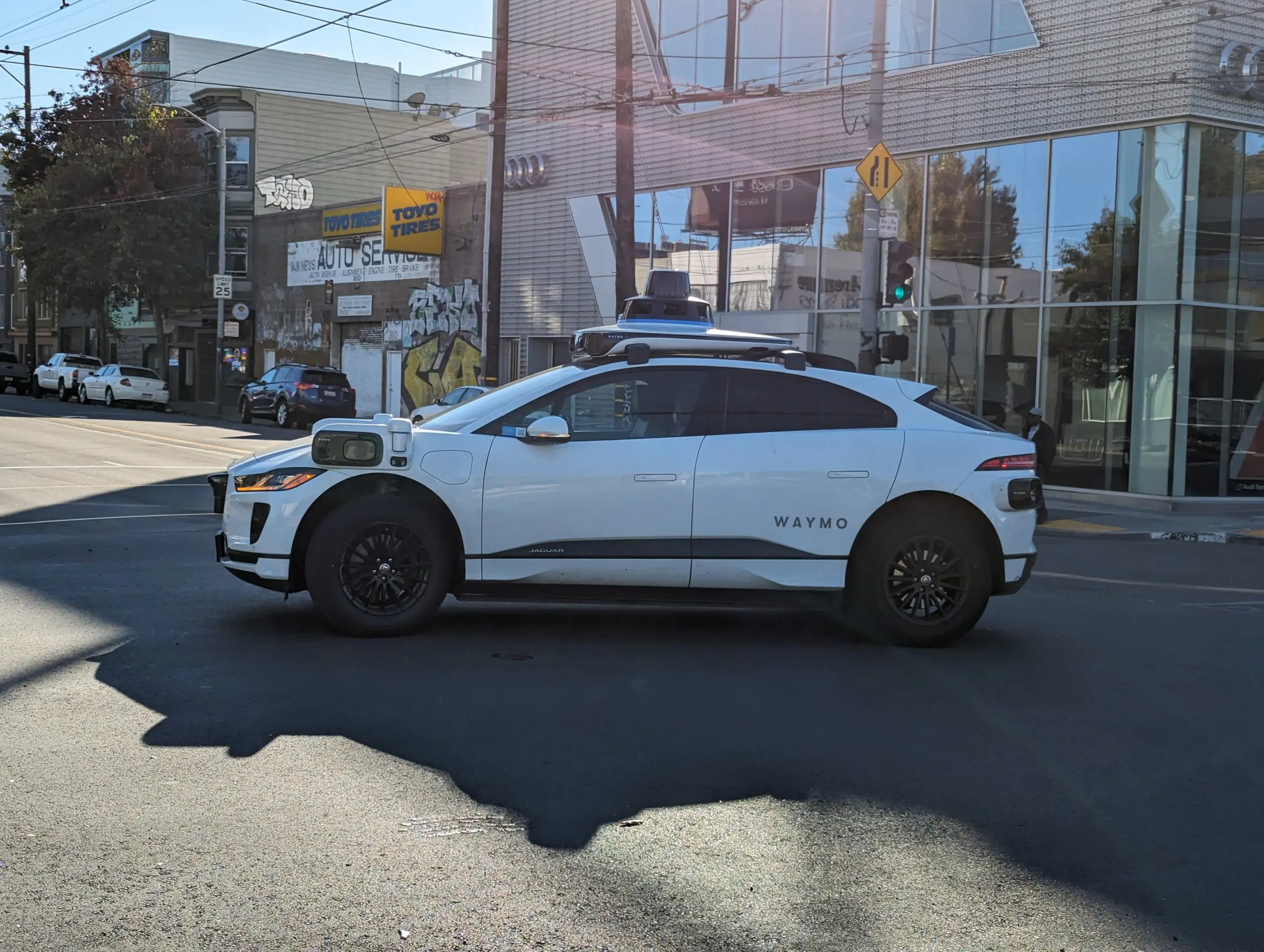
Robotaxi Parking Is Concentrated in San Francisco’s Best Housing Sites
Autonomous vehicle companies are leasing parking and charging lots across San Francisco, and a September analysis by Mission Local found that pattern concentrated almost entirely in the same central neighborhoods the city is counting on for new housing. Of roughly 30 identified staging and charging sites, only one sits west of Gough Street, with most clustered northeast of downtown where rideshare demand is highest.
The clearest example is a Waymo staging lot near Fifth and Brannan streets in SoMa, where reporter Joe Eskenazi counted about 50 vehicles parked during a visit. Waymo, Zoox, and other robotaxi operators need this kind of space to charge and stage vehicles between rides, and the real estate that works best for that purpose, close to downtown, flat, well-connected, is largely the same land the city has zoned for infill housing.
Why the Sites Cluster Downtown
UC Berkeley lecturer Molly Turner recalled an autonomous vehicle executive telling her nearly a decade ago that his top priority was securing real estate to park and charge his fleet. That priority has not changed as the fleets have grown. A single robotaxi supercharging station costs between $250,000 and $400,000 to build, according to figures Mission Local cited from an electrical contractor and a 2025 San Francisco Chronicle report, and operators sign long-term leases to spread that cost over time.
Those leases create a financial disincentive for landowners to sell. A real estate broker quoted by Mission Local said reliable rent from a well-funded AV company gives an owner little reason to sell a parking lot to a housing developer instead.
How Much Land Is Actually at Stake
The effect on the citywide housing supply looks small in isolation. Mission Local cited University of Oregon researchers who found that even under an aggressive robotaxi expansion scenario, only about 3.8 percent of Los Angeles parcels would become suitable for redevelopment as a result, with San Francisco’s share smaller still because the city has less surface parking to begin with. The concern is not that AV parking is blocking a large share of citywide housing capacity. It is that the sites being taken off the table are concentrated in the same close-in neighborhoods, SoMa, the northeast waterfront, and downtown, where the city has zoned for the most housing density.
San Francisco Chronicle reporting from earlier in 2026 documented the related fight over curb space, as Waymo vehicles increasingly occupy metered parking spots that were previously available to residents. Both issues stem from the same underlying dynamic: a fast-growing robotaxi fleet needs somewhere to sit between rides, and it is competing for the same real estate the city needs for other purposes.
What It Means for the City’s Housing Push
Mayor Daniel Lurie declared a rent emergency on September 10, citing a 26 percent rise in median rents and a 44 percent rise in eviction notices over the past year. The city’s housing strategy leans on converting underused parking and commercial land near transit into new units. The AV parking pattern Mission Local documented does not reverse that strategy, but it does compete for some of the same parcels, and no city agency has yet proposed zoning or leasing rules specific to autonomous vehicle staging lots.
Sources: Mission Local, San Francisco Chronicle.
Photo: 14th and Howard streets, San Francisco. CC BY-SA 3.0, via Wikimedia Commons.
More SF News
 How San Francisco Residents Can Get Ready for El Niño: Free Sandbags, Flood Maps and $100,000 GrantsSep 28, 2026
 Three Rival Slates Are Competing for San Francisco’s School Board This NovemberSep 27, 2026
 Mayor Lurie’s Charter Measures Have Raised $11 Million, More Than All Others CombinedSep 27, 2026
 Fisherman’s Wharf Is Getting a New Holiday Ice Rink This NovemberSep 27, 2026