
Walking the Haight:
A Deep History Tour
Most people walk into the Haight, photograph the street sign, and leave. This tour covers what’s behind the blocks: where the Grateful Dead lived, where Janis Joplin walked, where Charles Manson recruited, where bell-bottoms were invented, where the first free medical clinic in the country opened, and where Jimi Hendrix played from a flatbed truck in June 1967.

One street, every layer of it.
The tour has two modes. The Quick Walk is 17 stops along Haight Street and the blocks on either side, about a mile and a half at a gentle downhill trend, ending at Hippie Hill in Golden Gate Park. It takes about 90 minutes at a steady pace. The Deep Dive adds ten optional spur stops, including the Jefferson Airplane mansion at 2400 Fulton, the boarding house at 1090 Page where Big Brother and the Holding Company formed, and the Westerfeld House at Fulton and Scott. With the spurs, plan on three to four hours and about three and a half miles.
Several stops are private homes. View them from the sidewalk, keep your voice down, and do not knock, sit on steps, or photograph residents. Each stop below is a pin in the free SFGuide app, with directions and a short audio note you can play as you stand there.
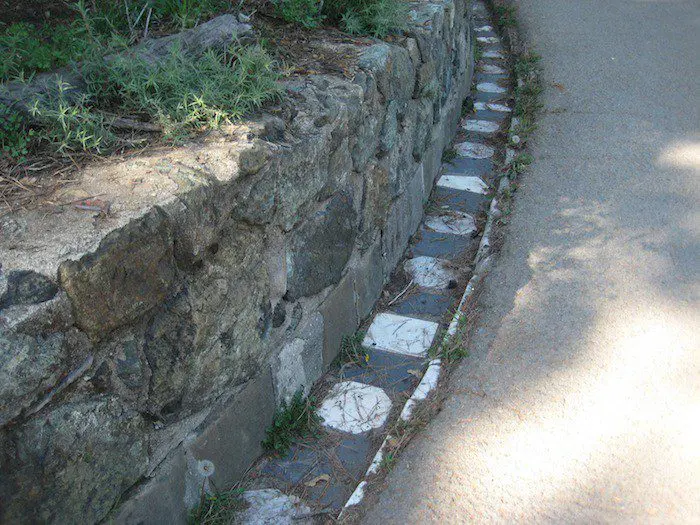
Buena Vista Park
The oldest public park in San Francisco, set aside in 1867. The drainage gutters on its western paths were built by WPA crews in the 1930s from broken Victorian cemetery headstones, and a few still read inscription-side up. The summit loop is an optional spur at the end of the tour.
Magnolia Brewing
A 1903 grocery that became the restaurant of burlesque performer Magnolia Thunderpussy in the late 1960s, then one of the city’s first craft brewpubs in 1997. It closed in August 2024 and reopened that December under local owners working through the original recipe book. The corner across Masonic held the Drogstore Cafe, a late-night anchor of the 1967 scene.

Bound Together Anarchist Bookstore
A volunteer-run anarchist bookstore on this block since May 1983, with roots going back to 1976. The “Anarchists of the Americas” mural on the east wall is the one piece of public art on Haight Street about the neighborhood’s radical history rather than its musical one.
Pork Store Cafe
Diner breakfast in a former butcher shop, serving since 1984. Eggs, biscuits and gravy, and a weekend line. A refuel stop: eat here now or hold out for Cha Cha Cha at stop 15.
The Doolan-Larson Building
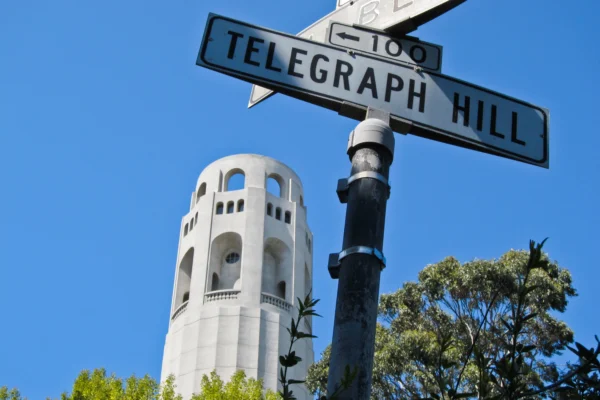
The famous corner. The 1903 building on the northwest corner survived the 1906 earthquake, gained six storefronts after it, and housed a rotating cast of counterculture businesses through the 1960s and 70s. In 2018 the National Trust for Historic Preservation named it its 100th National Treasure, the only Summer of Love site with that designation. The street sign on the lamppost is now bolted on.
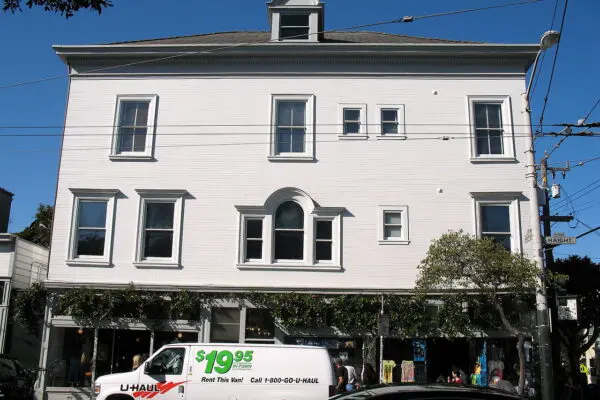
The Doolan-Larson Storefronts
Three addresses in half a block. Bell-bottom jeans were invented at 1510 in 1965 by Peggy Caserta and her seamstress mother. The Psychedelic Shop at 1535, opened January 1966, is generally considered the first hippie shop in the United States; its 1967 closing sign said GONE. The Print Mint at 1542 sold the Fillmore and Avalon posters for about a dollar each.
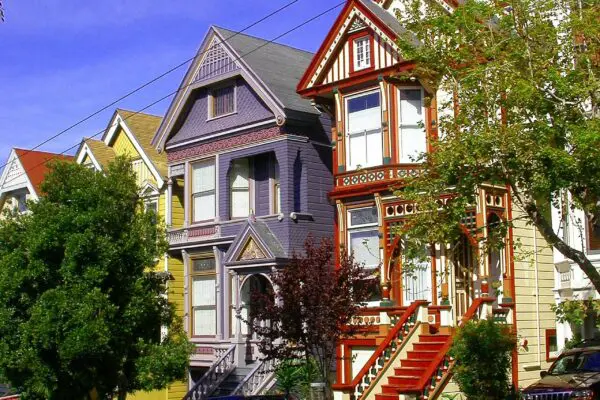
710 Ashbury: The Grateful Dead House
Jerry Garcia, Phil Lesh, Bob Weir, Bill Kreutzmann, and Pigpen lived here from 1966 to 1968. The October 2, 1967 drug raid and the band’s press conference on these steps turned the Dead into public opponents of the drug laws. Private residence: view from the opposite sidewalk.
635 Ashbury: Janis Joplin’s Apartment
Joplin lived in a second-floor walkup here in 1967, a block and a half from the Dead. The whole scene sat within a five-minute walk: Big Brother at 1090 Page, Quicksilver rehearsing on Lyon, the Diggers around the corner. Private residence.
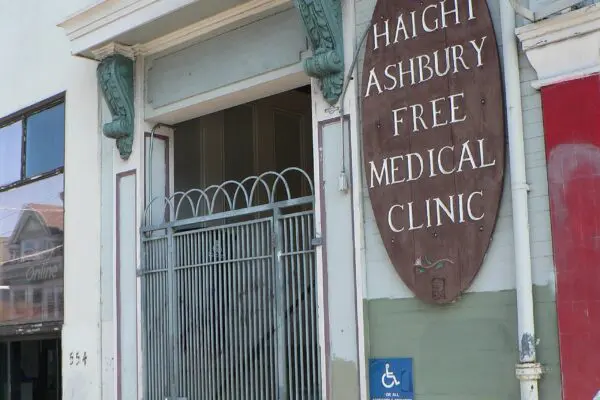
558 Clayton: The Free Medical Clinic
The first nonsectarian free medical clinic in the United States opened here on June 7, 1967, founded by 27-year-old Dr. David E. Smith. It saw 400 patients in its first week, treated addiction as medicine rather than moral failure, and ran for 52 years. The building is still in community use.
636 Cole: The Manson House
Charles Manson lived here from roughly April to July 1967, fresh out of federal prison, recruiting the first members of his Family from the crowds of the Summer of Love. The dark mirror of everything else on this tour. Private residence: do not linger.

1660 Haight: The Superba Theatre
A 1911 Art Nouveau theater behind a red facade, renamed the Superba in 1918 and closed in 1924. The high ceiling and proscenium survive inside the vintage clothing store that occupies it; check current hours before counting on going in.

1665 Haight: The Red Victorian
Built in 1904 as the Jefferson Hotel. In 1977 the artist Sami Sunchild bought it and ran it as a peace-themed bed and breakfast until her death in 2012. The red facade and peace-symbol windows remain through its changes of use.
1700 Haight: Straight Theater Site
A 1,310-seat movie palace opened in 1910, reborn in August 1967 as the Straight Theater, the neighborhood’s homegrown venue. The Grateful Dead rehearsed here that summer. Demolished in 1981; a Goodwill stands on the site. The app shows the 1967 facade.
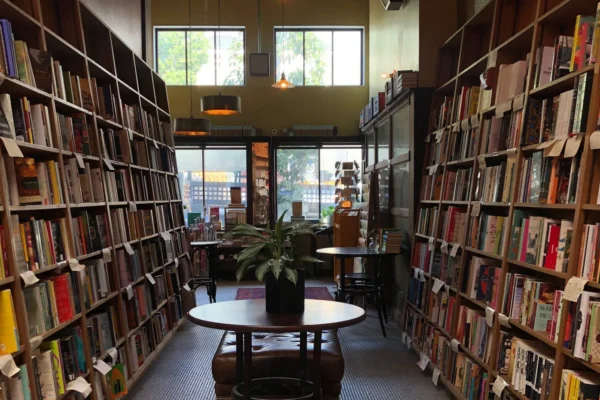
1727 Haight: The Booksmith
Home of the Red Vic Movie House and its couches from 1991 to 2011, and since 2021 home of The Booksmith, the independent bookstore founded on this street in 1976. Allen Ginsberg gave one of his last readings here in December 1996. Look up across the street: the second floor of 1748 was the I-Beam, the city’s defining new wave and punk venue from 1977 to 1994.
1801 Haight: Cha Cha Cha
Caribbean tapas at this corner since October 1984, now an approved San Francisco Legacy Business. A refuel stop before the final stretch: sangria, plantains, and a no-reservations room.
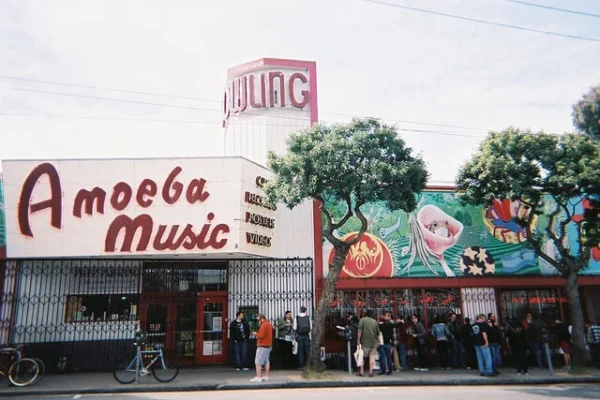
1855 Haight: Amoeba Music
A 1907 streetcar barn that became the Park Bowl bowling alley, then in 1997 Amoeba Music: 24,000 square feet of records in custom bins. The bowling alley hosted gay and lesbian leagues for decades when few venues welcomed them.
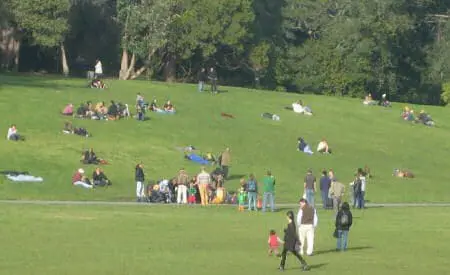
Hippie Hill & Robin Williams Meadow
Jimi Hendrix played a free flatbed-truck set in the Panhandle nearby on June 25, 1967. George Harrison’s August 1967 walk through the Haight ended on this slope and ended his LSD years. The weekend drum circle has met here for more than fifty years. The walk ends here; the N-Judah at Carl and Cole runs you back.
Ten optional spurs.
Switch the app to Deep Dive for ten more stops, ordered to follow the main walk east to west: the Westerfeld House at Fulton and Scott (18), 1090 Page where Big Brother and the Holding Company formed (19), the Richard Spreckels Mansion (20) and the Buena Vista summit loop (21) at the start of the route, the 1890 Cranston-Keenan Queen Anne (22), the Diggers’ Free Store site on Page (23), the Panhandle where the daily free concerts happened (24), the Jefferson Airplane mansion at 2400 Fulton (25), McLaren Lodge at the park gate (26), and the Polo Field site of the January 1967 Human Be-In (27), two miles west. The Westerfeld and Polo Field spurs are the long ones; with everything, plan on three to four hours.
Before you go.
Best time
Late morning into early afternoon on a weekday. Weekends are crowded around the Haight and Ashbury corner and Hippie Hill. June through August mornings are foggy and cold until midday; October has the clearest weather.
Getting there
The 6 and 7 Muni buses stop within a block of the start at Haight and Baker. The N-Judah stops at Carl and Cole, four blocks south of the route’s west end. About 25 minutes from downtown on Muni. Parking is metered and tight; use a garage in Cole Valley or take transit.
Private homes
The Dead house, Joplin’s, the Manson house, and several spur stops are people’s residences. View from the sidewalk, keep voices down, and do not knock, sit on steps, or photograph anyone living there.
Weather
The Haight gets fog and the temperature can drop ten degrees when it rolls in. Bring layers regardless of the forecast.
Frequently asked.
How long does the Haight walking tour take?+
Is it free?+
Where does it start and end?+
Can I see inside the Grateful Dead house?+
Is the route hilly?+
Keep exploring.

Walk the Haight with the guide in your pocket.
The full route, the map, and the audio for every stop, free on iOS and Android. Written by a local guide. No ads, no affiliate nonsense.