
Study Finds 20% Less Crime at San Francisco Corners Staffed by Urban Alchemy
Reported crime was about 20 percent lower at San Francisco intersections staffed by Urban Alchemy street ambassadors than at comparable intersections without them, according to a peer-reviewed study published on September 1, 2026.
What the study measured
The paper, “Civilianized safety practitioners reduce crime and disorder: Evidence from a quasiexperimental evaluation in San Francisco,” was published in the journal PNAS Nexus. It was written by Stanford sociologist Forrest Stuart with Caylin Louis Moore and Patrick Janulis.
The researchers combined five years of San Francisco Police Department data, from 2018 to 2023, across 624 city intersections. They compared the 41 intersections where ambassadors were stationed against other intersections with similar crime rates, and they also compared crime at the same corners when ambassadors were on duty and off duty. The study was not funded by Urban Alchemy.
The findings
Overall reported crime was 20 percent lower where ambassadors were stationed, which the researchers put at roughly 74 fewer incidents a month. Crime associated with behavioral health, such as trespassing and disorderly conduct, was down by nearly 27 percent. Drug crime was down 29 percent. Property crime was unchanged, a result Stuart told the San Francisco Standard he found surprising.
Across a year, the study estimates the ambassadors’ presence prevented around 900 low-level crimes, which it values at up to $7.7 million in avoided costs.
Who the ambassadors are
Urban Alchemy ambassadors are unarmed civilian workers, and the organization says most of them were formerly incarcerated. They hold no law enforcement authority. Their assigned work ranges from clearing trash to de-escalating conflict. They wear black vests with fluorescent stripes and the Urban Alchemy logo.
San Francisco awarded the nonprofit a $22.51 million contract in January 2026 to continue in the Tenderloin and expand into SoMa, according to the San Francisco Standard. The organization has received more than $30 million from the city since it was founded in 2018, and it works in nine cities.
The wider argument
Urban Alchemy has drawn criticism, including complaints from city lawmakers about what it pays workers and earlier reporting on allegations of misconduct by individual employees. The new study does not address those disputes. It measures only the relationship between ambassador presence and crime reported to police.
A separate report on the study by SFist and coverage by the San Francisco Chronicle describe the same headline figures. Both the Chronicle and SFist refer to the journal as the Proceedings of the National Academy of Sciences; the article identifier points to PNAS Nexus, a separate journal published by the same academy.
Where this applies
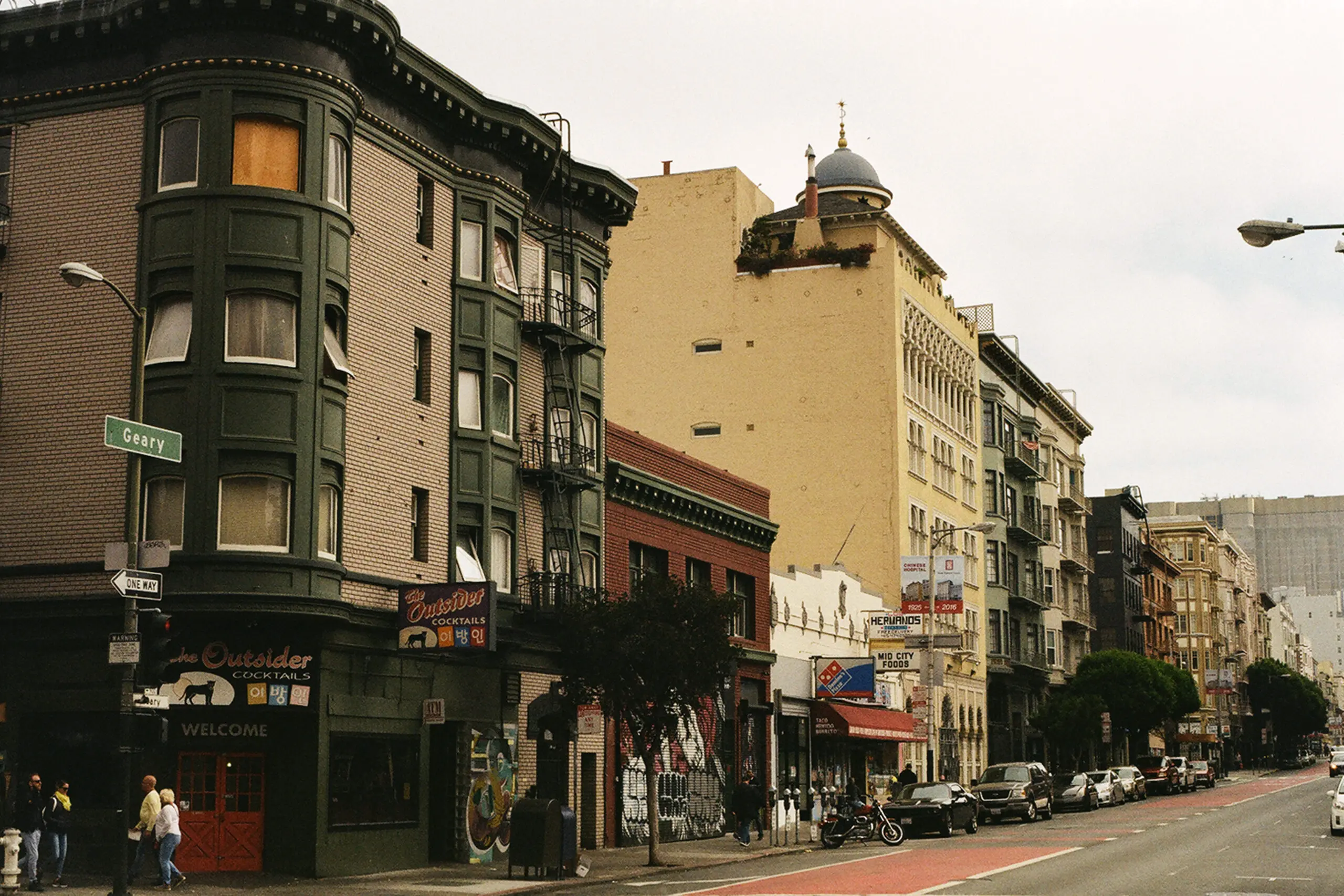
The intersections in the study are concentrated in the Tenderloin, the district bounded roughly by Market Street, Van Ness Avenue, Geary Street, and Mason Street. It sits next to Union Square, the Civic Center, and the Moscone Center, so visitors staying downtown often walk through part of it.
For what is on in the city this month, see our September 2026 guide.
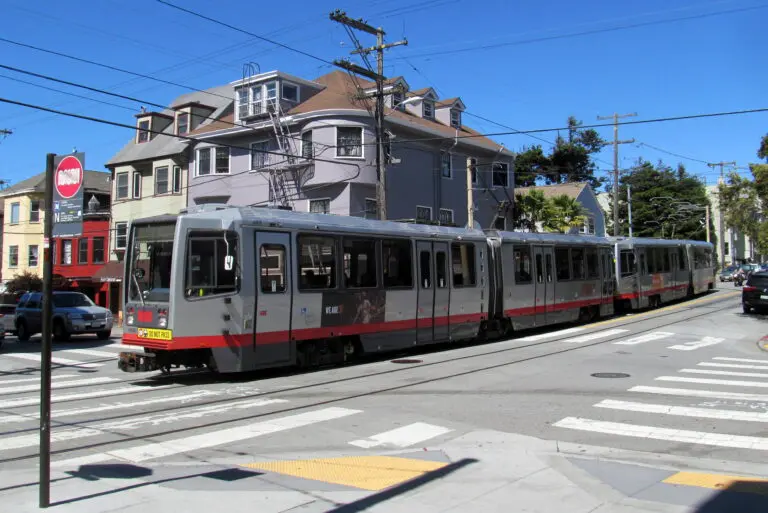
Photo: Rob Thomas, CC BY-SA 4.0, via Wikimedia Commons.
More SF News
 Ken Kesey’s Original Furthur Bus Is on Display in Golden Gate Park Through October 25Sep 8, 2026
 The Golden Gate Dozen Links 12 San Francisco National Park Sites in One 13-Mile RouteSep 7, 2026
 Muni Heritage Weekend Returns September 19 and 20 With Free Rides on Historic StreetcarsSep 7, 2026
 Cole Valley Is Getting Pasta Supply Co, a New Sushi Restaurant, and an Antique StoreSep 5, 2026