
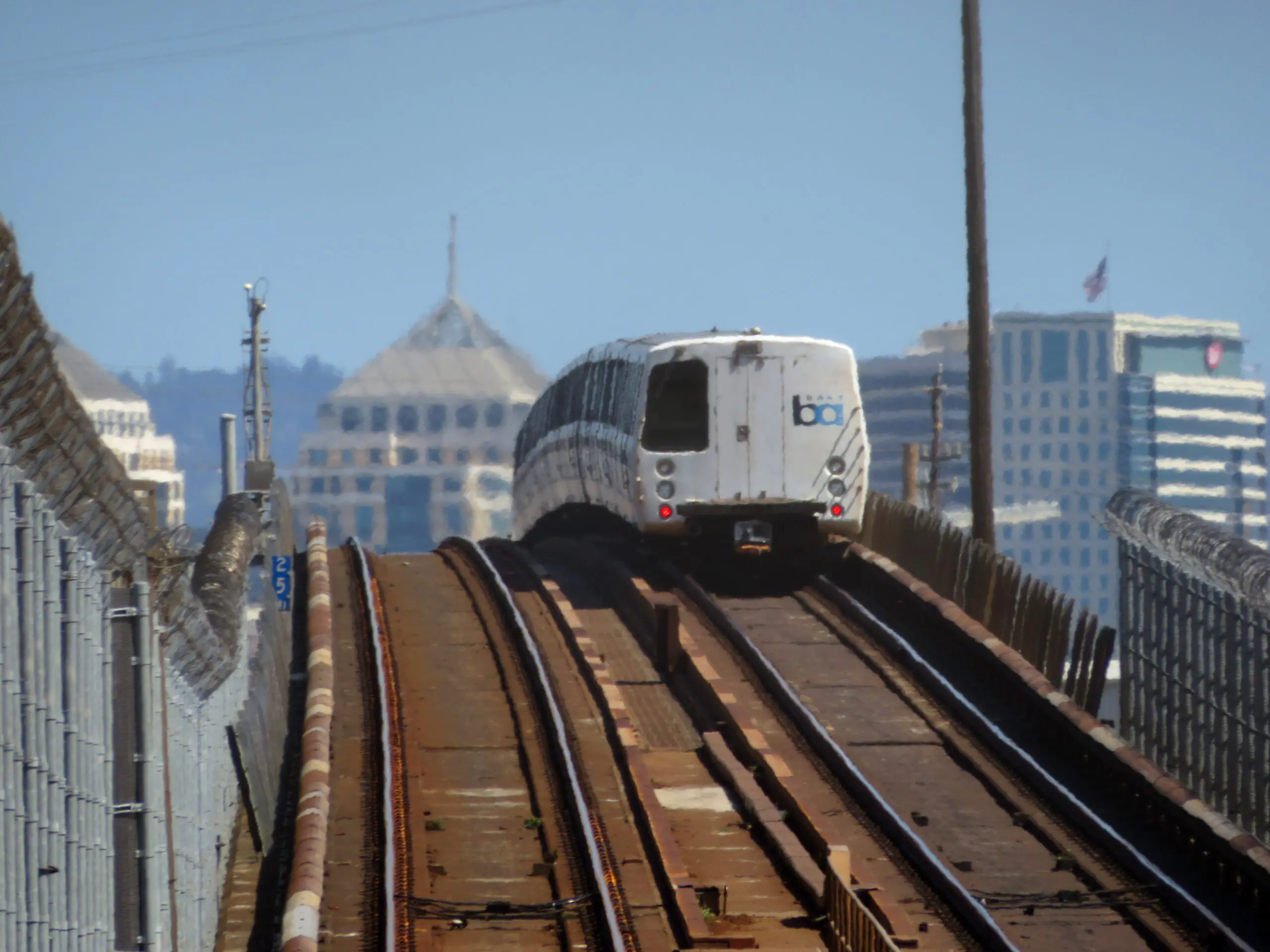
BART Audit Finds Quality-Control Failures in Transbay Tube Bolt Work
An audit by BART’s Office of the Inspector General has found that the agency’s seismic retrofit of the Transbay Tube went ahead without adequate quality-control testing of its anchor bolts, and that roughly 30 percent of the high-strength bolts failed during installation in the first half of 2019. More than 8,000 bolts were eventually pulled out and replaced with a different design, at a cost of more than $2 million, twice what the fastening system was budgeted to cost.
The findings were reported by NBC Bay Area on September 16. The retrofit itself was finished in 2024.
What the Audit Found
In 2018, BART let one of the retrofit contractors substitute Korean-made steel for the US steel originally specified for the bolts, after the contractor raised supply concerns. BART’s condition was that the substitute material be tested for chemical composition and meet welding and quality-control specifications.
According to the audit, the bolts were ordered and manufactured nearly a year before BART received the detailed plan for how they would be inspected and tested. As the report put it, “BART did not have the opportunity to evaluate planned welding processes and quality control measures.”
Quality-assurance testing then covered three of 8,030 anchors, and only one of the two bolt types the contractor had ordered.
Inspector General Claudette Biemeret said the tests that were run did not find the Korean material to be inferior, and that BART’s design was not found to be flawed either. “Rather than continue to press the issue and shift the burden to the contractor,” Biemeret said, “BART decided to pay for a different method and scrap the original anchors.” The audit faults BART for not enforcing policies it already had.
The investigation began after someone described as an insider complained to the Inspector General’s office in 2023 about quality control and oversight on the $313 million project.
What It Means for Riders Now
This is an audit of how a finished job was managed, not a warning about the tunnel you ride through today. The bolts that failed were caught during installation in 2019, five years before the project wrapped. BART said it responded by developing an alternative design that removed the welded connection while still meeting the project’s seismic engineering requirements, and that the redesigned anchors were installed without failure. The agency said it appreciated “the Office of Inspector General’s rigorous and independent oversight.”
The Transbay Tube carries every BART line between San Francisco and the East Bay, so it is the tunnel you are in between Embarcadero and West Oakland. The retrofit it received was designed to let the tube withstand a major earthquake. Nothing in the audit asks for any of that work to be redone.
What the audit does describe is a cost overrun and a process failure: $1 million spent on anchors that were scrapped, and another $1 million to replace them.
Reading the Report Yourself
The Office of the Inspector General publishes its audits at oig.bart.gov, where the 2026 audit reports are listed. The office is independent of BART management and takes complaints from the public and from BART employees.
For the rest of how the system works day to day, see our guide to downtown San Francisco, which covers getting around by BART and Muni.
Photo: Pi.1415926535, CC BY-SA 3.0, via Wikimedia Commons.
More SF News
 KEXP and Blue Bear Chosen to Remake the Haight and Ashbury Corner BuildingSep 19, 2026
 Mexican Navy Tall Ship Cuauhtemoc Opens to the Public at Piers 15-17 September 23Sep 19, 2026
 Yank Sing Closes Its Rincon Center Dim Sum Room September 20Sep 19, 2026
 First San Francisco Brazilian Film Festival Runs September 24 to 27 at the VogueSep 18, 2026