SFUSD Board Votes to Replace the School Lottery With Neighborhood Schools Starting in 2028-29
The San Francisco Board of Education voted 5-2 on Tuesday, October 13, to replace the school district’s elementary enrollment lottery with a neighborhood-based system. The plan the board backed, known as Option C, assigns each incoming elementary student a seat at a school near home. It takes effect for the 2028-29 school year, so families applying this fall for 2027-28 still go through the current lottery. The vote was reported by KQED, The San Francisco Standard and SFist.
What Option C Does
Under the framework, a student entering a San Francisco Unified School District elementary school is automatically assigned to the neighborhood school for their home address, and families who accept that placement are done. Families no longer rank a list of schools. A set of schools with citywide programs, such as language immersion pathways, K-8 campuses and some special education programs, stays open to applicants from anywhere in the city, but a seat there is not guaranteed, according to KQED and the Standard.
The board passed over Option B, which would also have guaranteed a neighborhood seat but let families apply to any other school with open seats. In a district survey of nearly 3,000 respondents cited by KQED, 72 percent said Option B would meet their needs and 48 percent approved of Option C.
Who Voted How
Commissioners Alida Fisher and Supriya Ray voted against Option C and had backed Option B. Board President Phil Kim, Matt Alexander, Lisa Weissman-Ward and Parag Gupta were among the five commissioners voting yes, according to SFist and Mission Local. Superintendent Maria Su recommended Option C. “Families should not have to roll the dice and try their luck in our system,” Su said, as quoted by both KQED and the Standard. Su told the board the plan “puts the responsibility squarely on the district to make sure that every single neighborhood school is worth choosing.”
Fisher questioned starting the system before resource gaps between schools are closed. Deputy Superintendent John Davis said strengthening struggling schools would take at least five to 10 years, per the Standard.
What Families Should Know Now
Applying this fall: Families applying in fall 2026 for the 2027-28 school year use the existing lottery, The Standard reported in its October 9 explainer. The lottery has been in place since 2011.
First families affected: students entering elementary school in fall 2028, who would apply in fall 2027.
Still undecided: attendance-area boundaries and maps, tiebreakers for citywide program seats, and how admission to those programs will work. District staff will work with demographers on the maps. KQED reports that 19 of the district’s 58 attendance areas are projected to be short of kindergarten seats based on 2033 resident projections, and boundary changes are expected to close some but not all of that gap.
Next votes: the board meets again in November on the details, and the final policy vote is expected in April 2027. The Standard puts that vote on April 13, 2027; Mission Local reported April 11.
For other school-related changes in the city, see SFGuide’s story on lower speed limits near 230 San Francisco schools.
Sources: KQED, October 14, 2026; The San Francisco Standard, October 14, 2026; The San Francisco Standard, October 9, 2026; SFist, October 14, 2026; Mission Local, October 14, 2026.
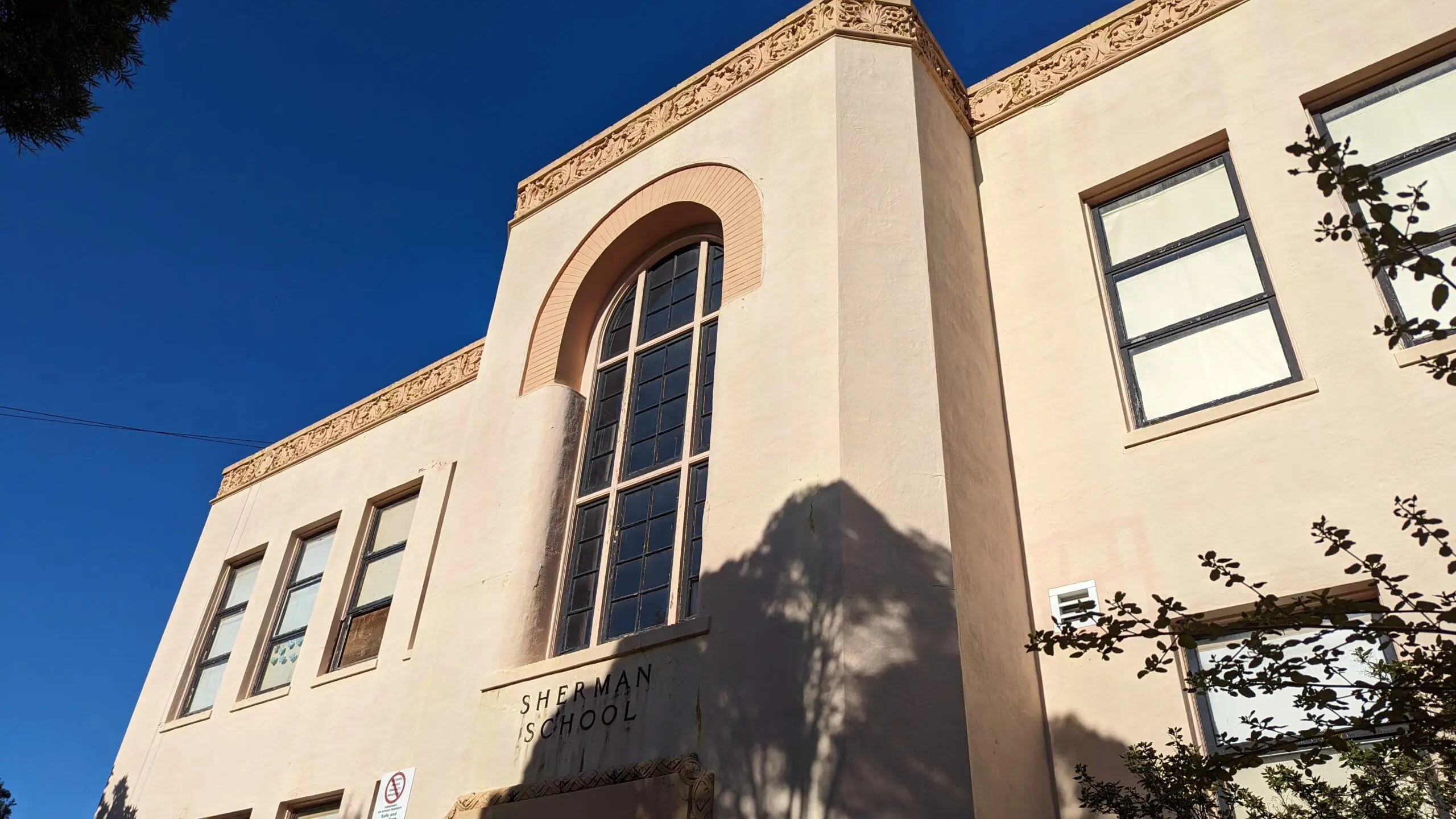
Photo: Sherman Elementary School. Daderot, CC0, via Wikimedia Commons.
More SF News
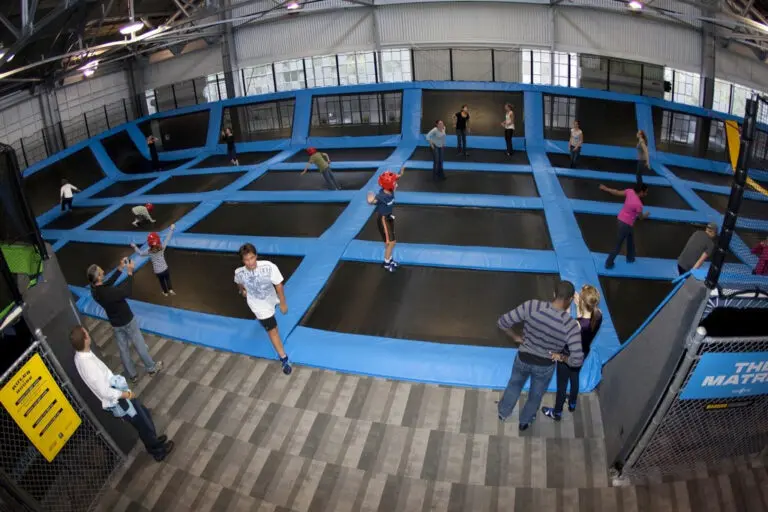 House of Air at Crissy Field Will Close February 15, 2027 as Its Presidio Lease EndsOct 18, 2026
 Embarcadero Park Pavilion: Three Designs Go to the Arts Commission October 19Oct 18, 2026
 San Francisco Speed Cameras Cut Excess Speeding 84 Percent in 18 Months, SFMTA Report SaysOct 17, 2026
 Westbound I-80 Closes Through SoMa October 23 to 26 for Bayshore Viaduct WorkOct 17, 2026