
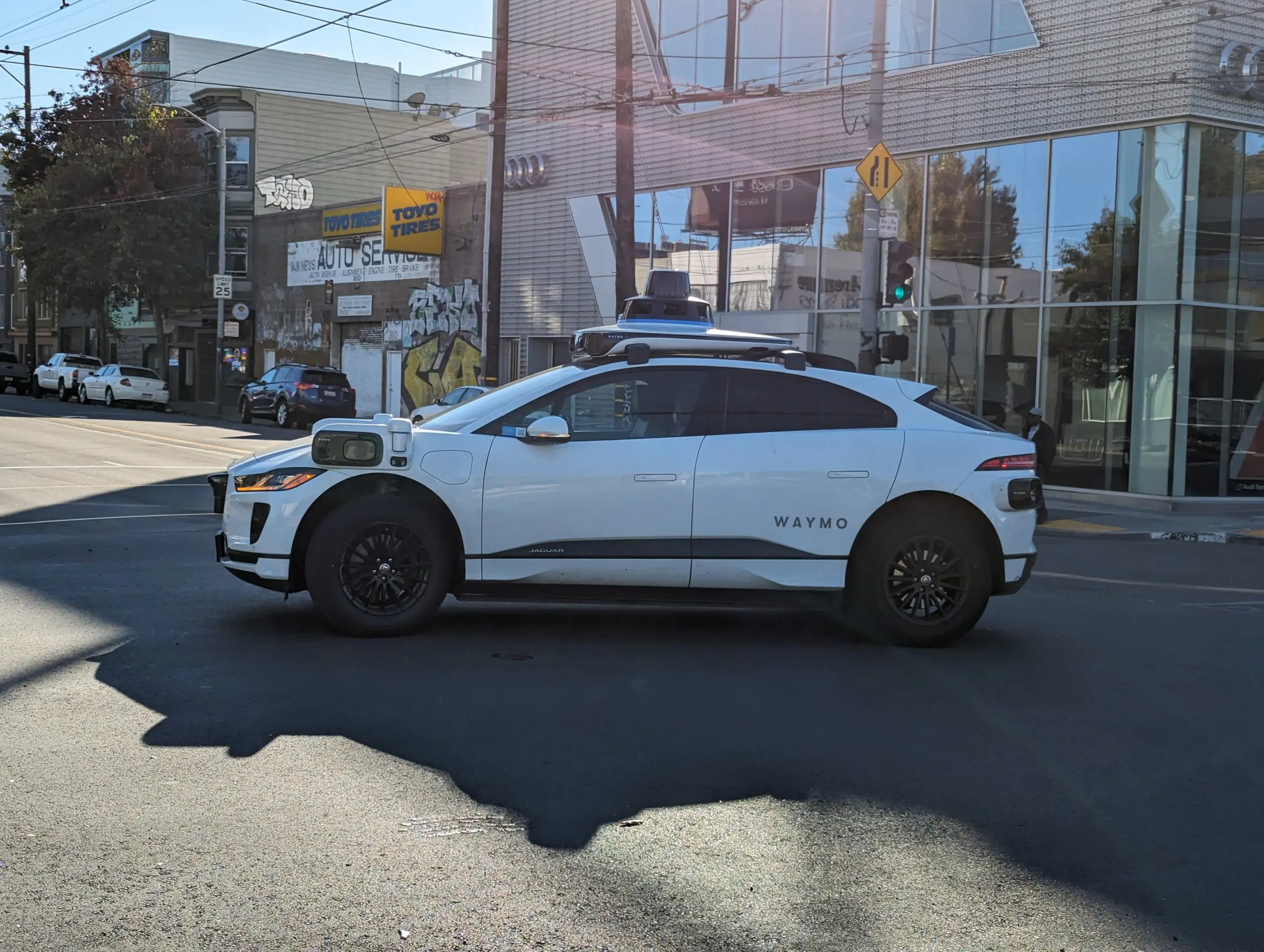
California’s New Robotaxi Law: Fines Up to $10,000 When Driverless Cars Block First Responders
California will let cities and counties fine robotaxi companies up to $10,000 per vehicle when a driverless car blocks police, firefighters or paramedics for more than 30 minutes. Gov. Gavin Newsom approved Senate Bill 1246 on September 30, 2026, according to the bill’s legislative record, where it is listed as Chapter 1021 of the 2026 statutes. The penalties do not start right away: the law becomes operative on July 1, 2028.
For San Francisco, this sets the rules for what happens when a driverless car gets in the way of an emergency. TechCrunch puts Waymo’s fleet at about 4,000 vehicles nationally, roughly 1,200 of them in the Bay Area.
What the Law Requires
A 30-second line to a human. Emergency officials must be able to reach a remote operator within 30 seconds, through a dedicated phone line or a communication device in the vehicle, according to the bill text.
Technicians on the scene. Companies must immediately dispatch a local incident technician when one of their cars crashes, becomes immobilized, or when an emergency responder asks for one. The technician can be a company employee or a contractor that meets the bill’s staffing rules.
A way to shut the car down. Robotaxis must be disabled manually or remotely when a first responder asks, according to bill author Sen. Dave Cortese (D-San Jose).
Warnings during outages. Companies must notify local governments when a system-wide failure hits their fleet.
Remote drivers in the U.S. Anyone driving a robotaxi remotely must be located in the United States and hold a driver’s license valid for operation in California, of the right class and with any required endorsements.
The Fines
City attorneys and county counsels can bring civil cases on behalf of their jurisdictions. The bill sets two caps:
Up to $10,000 per autonomous vehicle that obstructs emergency operations for more than 30 minutes.
Up to $5,000 per violation of the rules on dispatching local incident technicians.
Courts weigh the nature of the violation, whether it interfered with an emergency, and whether it was repeated. Cortese’s office says the penalty money returns to the local jurisdiction. In San Francisco, that means City Attorney David Chiu’s office would be the one bringing the case.
The California Department of Motor Vehicles must also adopt guidelines by July 1, 2028 that set reasonable response times for technicians, taking into account location, how serious the incident is, and the size of a company’s fleet.
Why San Francisco Pushed for It
The December 2025 power outage is the incident Cortese’s office points to. When traffic signals went dark across parts of the city, about 1,500 Waymo vehicles were stranded, and first responders faced delays of up to 53 minutes before reaching the company, according to his August 31 release. Hoodline reports that the San Francisco Department of Emergency Management called Waymo’s hotline 31 times during that outage and that 64 vehicles had to be moved by hand.
Engadget also cites July 2026, when Waymo vehicles were left stopped at intersections in heavy traffic after running low on power. Hoodline reports Waymos blocked streets during this year’s Fourth of July crowds.
“California has embraced autonomous vehicles, but we cannot embrace innovation at the expense of public safety,” Cortese said, as quoted by TechCrunch. Backers included California Professional Firefighters, the California Police Chiefs Association, the California Association of Highway Patrolmen, SEIU California, the Amalgamated Transit Union and the California Federation of Labor.
What Changes for Riders
Nothing, for now. Robotaxi service in San Francisco continues as it runs today, and the new obligations fall on the companies, not on passengers. The response-time rules and the fines apply from July 2028, after the DMV writes its guidelines.
We covered the debate over robotaxi parking in residential buildings last month, and the Lyft driver settlement announced October 1.
Sources: the bill text and status for SB 1246; Sen. Cortese’s August 31 release; reporting by TechCrunch, Engadget and Hoodline.
Photo: Mliu92, CC BY-SA 3.0, via Wikimedia Commons.
More SF News
 Golden Gate University in Talks to Buy the Contemporary Jewish Museum Building on Mission StreetOct 4, 2026
 Indigenous Peoples’ Day 2026 in San Francisco: Alcatraz Sunrise Gathering and Yerba Buena GardensOct 3, 2026
 Glen Canyon Park Wildfire Risk: What San Francisco Will and Won’t Do About Its EucalyptusOct 3, 2026
 Lyft Agrees to $272.5 Million Driver Settlement: Who Qualifies and How Payment WorksOct 2, 2026