
San Francisco Declares a Local Emergency for El Niño: What It Changes and How to Prepare
Update, November 19, 2026: The first big El Niño storm hit on Wednesday, November 18. San Francisco recorded 2.64 inches of rain that day, breaking the record for the date set in 1918 and making it the sixth-wettest November day on record, according to the National Weather Service as reported by CBS San Francisco. The Embarcadero near Pier 14, the Outer Sunset and parts of the Mission flooded; flooding closed the I-280 off-ramp at Cesar Chavez Street and the US-101 off-ramp at Alemany Boulevard; SFO had a ground stop until noon; the M line was rerouted onto the K line because of flooding at 19th Avenue; a fallen tree blocked the Powell-Mason cable car line; and the zoo closed for the day, the San Francisco Standard reported. Several businesses on 14th Street in the Mission, including Rainbow Grocery and Total Wine, were still closed Thursday after sewage backed up through floor drains, per the Standard. The Department of Emergency Management’s flood advisory runs through Saturday, November 21. Fire Chief Dean Crispen warned against riding e-bikes and scooters or driving electric cars through standing saltwater, because salt can get into lithium-ion batteries and start a fire hours or days later. For free sandbags, see our El Niño prep guide.
Mayor Daniel Lurie declared a local emergency on Friday, October 23, 2026, so San Francisco departments can buy flood barriers, pumps and generators and award contracts faster ahead of El Niño storms. He announced it at a news conference at Pier 14, the San Francisco Standard reported. The city declaration follows the statewide state of emergency Gov. Gavin Newsom proclaimed on September 21.
What the Declaration Does
The order temporarily streamlines city purchasing and contracting, lets the city redirect funding as needed, and runs the response through the Emergency Operations Center, SFist reported. KQED reported that it lets the mayor move money between and within departments and simplifies contract awards for more than half a dozen of them.
The departments named are Public Works, the Public Utilities Commission, the Port of San Francisco, SFMTA, Recreation and Park and San Francisco International Airport, with the Department of Emergency Management coordinating preparations for flooding, power outages and facility damage. The supplies on the city’s list are flood barriers and pumps for infrastructure, generators to keep essential services running during outages, and first-aid supplies, shelter materials and portable restrooms for residents and emergency workers. No spending total was announced.
“We are acting now to make sure our departments have the resources they need to protect San Franciscans quickly throughout the season,” Lurie said, according to SFist. City Administrator Carmen Chu said, “Having the ability to purchase what we need, when we need it, is essential to delivering effective response amid rapidly changing emergency conditions.”
The Forecast
KQED cited the National Weather Service’s Climate Prediction Center at an 83 percent chance of a record-breaking El Niño through the end of the year. A UC Davis report cited by KQED lists the runways at SFO and Oakland airports, Highway 37 and the eastern approach of the Bay Bridge among the low-lying areas vulnerable to flooding this winter. The Standard reported that officials expect elevated water levels and high tides from Tuesday through Saturday of this week, October 27 to 31, and that storms could arrive as soon as November.
Supervisor Matt Dorsey said the city may not get the kind of federal storm-recovery help the Bay Area received during the late-1990s El Niño. “I don’t think we have a federal partner like that right now. So that really raises the stakes,” he said, per the Standard.
Muni During Storms
SFMTA is adding maintenance and protective equipment, and during severe weather it may adjust service and replace rail and trolley service with buses, KQED reported. On storm days, check SFMTA’s service alerts before you head out.
What the City Is Asking Residents to Do
“We need you now to restock your emergency kit,” Department of Emergency Management executive director Mary Ellen Carroll said, adding that residents should check on neighbors who may need help, especially during a power outage. The city’s list, from the news conference and its guidance:
- Sign up for AlertSF by texting your ZIP code to 888-777.
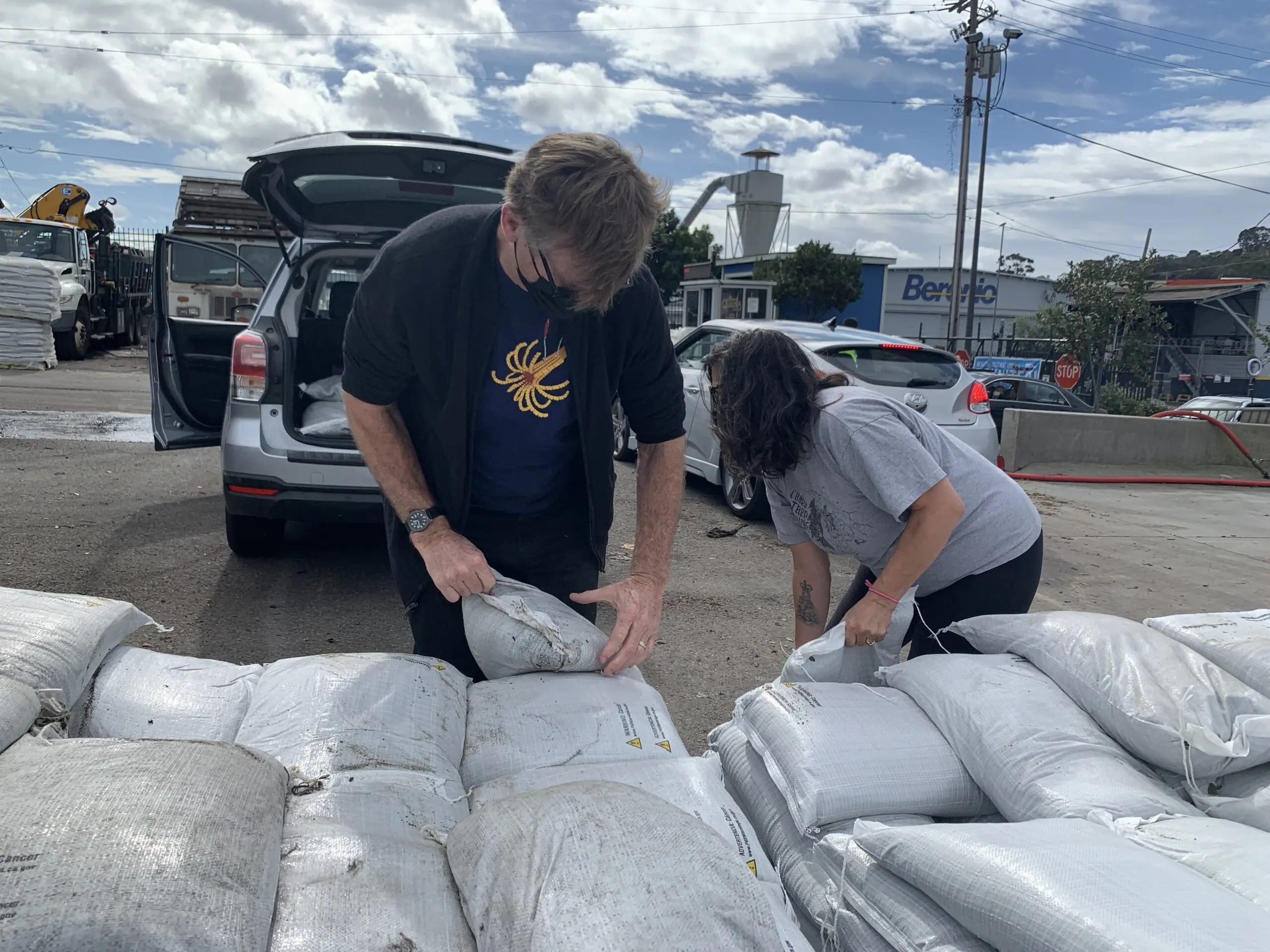
- Pick up free sandbags from Public Works, up to 10 per address. Pickup is at 2323 Cesar Chavez St., Monday through Saturday, 8am to 2pm.
- Clear leaves from the storm drain on your block. Dorsey promoted the city’s Adopt-a-Drain program.
- Move or elevate belongings in garages and basements, and secure outdoor items.
- Keep flashlights and extra batteries ready for power outages.
- Look into flood insurance.
- Avoid travel during storms.
The city’s severe storms page now includes a map of evacuation and supply sites, according to KQED. Our El Niño prep guide covers sandbag pickup, the SFPUC’s 100-year flood map and the grants of up to $100,000 for flood-proofing.
Other Declarations Around the Bay
The Santa Clara Valley Water District declared its own emergency days earlier, KQED reported, and Sonoma County supervisors issued an emergency proclamation, per SFist. Caltrans is raising flood-prone stretches of Highway 37 by 3 feet before the rains, with another weekend closure planned for November 13 to 15; see our Highway 37 closure details. The season’s predicted king tides start November 24 to 26, and our king tide dates list the rest.
Photo: San Francisco Public Works. Residents picking up free sandbags at the Public Works operations yard.
More SF News
 San Francisco Will Merge Planning and Building Inspection Into One Department Under Prop FNov 20, 2026
 Civic Center Plaza Tree Lighting Is December 2: Free, 4pm to 7pm, With the 50-Foot Fir Lit at 5:30pmNov 18, 2026
 Muni Bus Cameras With AI Will Ticket Drivers Blocking Transit Lanes and Bus Stops Starting in 2027Nov 18, 2026
 California DMV Bars Waymo From Freeways, So Robotaxi Rides to SFO Now Use Surface StreetsNov 18, 2026