
San Francisco’s Pretrial Program Is Closing, Its Replacement Isn’t Ready Until 2027
San Francisco’s pretrial diversion program stops taking new referrals for any of its services on September 30 and shuts down completely on November 13, and the city’s replacement won’t be ready until January 2027.
What Is Closing
The San Francisco Pretrial Diversion Project has run two main programs for people awaiting trial: Assertive Case Management, for defendants judges enroll to help ensure they show up in court, and In-Custody Referral, in which case managers visit jailed clients and present release plans to judges. The nonprofit stopped accepting new clients for its main programs in early August and served 1,753 people in the first quarter of 2026 alone, according to Mission Local.
Why It’s Ending
Mission Local reports the closure follows declining staff, reduced private funding, a growing workload, and a decision by the city and the courts to cut the organization’s annual contract. Matt Miller, the nonprofit’s interim CEO, said: “If we cannot see someone through their time with us, it is better to be honest about that before we begin than to take someone on and leave them without the support they were promised.”
The Gap Before the Replacement Arrives
The Adult Probation Department has contracted for $12.7 million a year to run replacement pretrial services, but that program is not expected to launch until January 2027. In the meantime, courts are referring defendants to the Community Assessment and Services Center, which operates only a couple of hours a day, compared with SF Pretrial’s weekday 9-to-5 hours, and requires clients to report to a SoMa office themselves rather than receiving the individual case management SF Pretrial provided.
Public defenders say the gap is already being felt. Aleem Raja, co-manager of the felony unit at the Public Defender’s Office, said: “There is no transition right now.” Defense attorney Rose Mishaan, who said she lacks training as a case manager, put it this way: “I’m being forced into the position of having to act like a case manager.” Defense attorneys report a rise in failure-to-appear warrants since the closure began, and ACLU attorney Avram Frey said: “There’s no plan now.”
Sources: Mission Local, The San Francisco Standard.
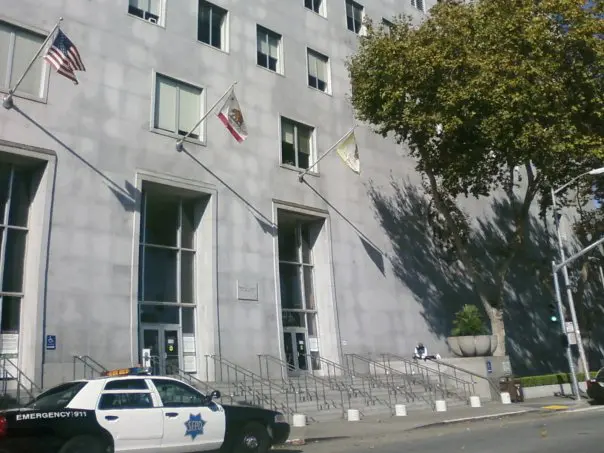
Photo: Public domain, via Wikimedia Commons.
More SF News
 House of Air at Crissy Field Will Close February 15, 2027 as Its Presidio Lease EndsOct 18, 2026
 Embarcadero Park Pavilion: Three Designs Go to the Arts Commission October 19Oct 18, 2026
 San Francisco Speed Cameras Cut Excess Speeding 84 Percent in 18 Months, SFMTA Report SaysOct 17, 2026
 Westbound I-80 Closes Through SoMa October 23 to 26 for Bayshore Viaduct WorkOct 17, 2026