
Fisherman’s Wharf to the Marina:
The Working Waterfront
This walk skips the crowded center of Fisherman’s Wharf and follows the shoreline west into the Marina: historic ships, WPA architecture, a wave-powered sound sculpture, and the last building of the 1915 world’s fair.
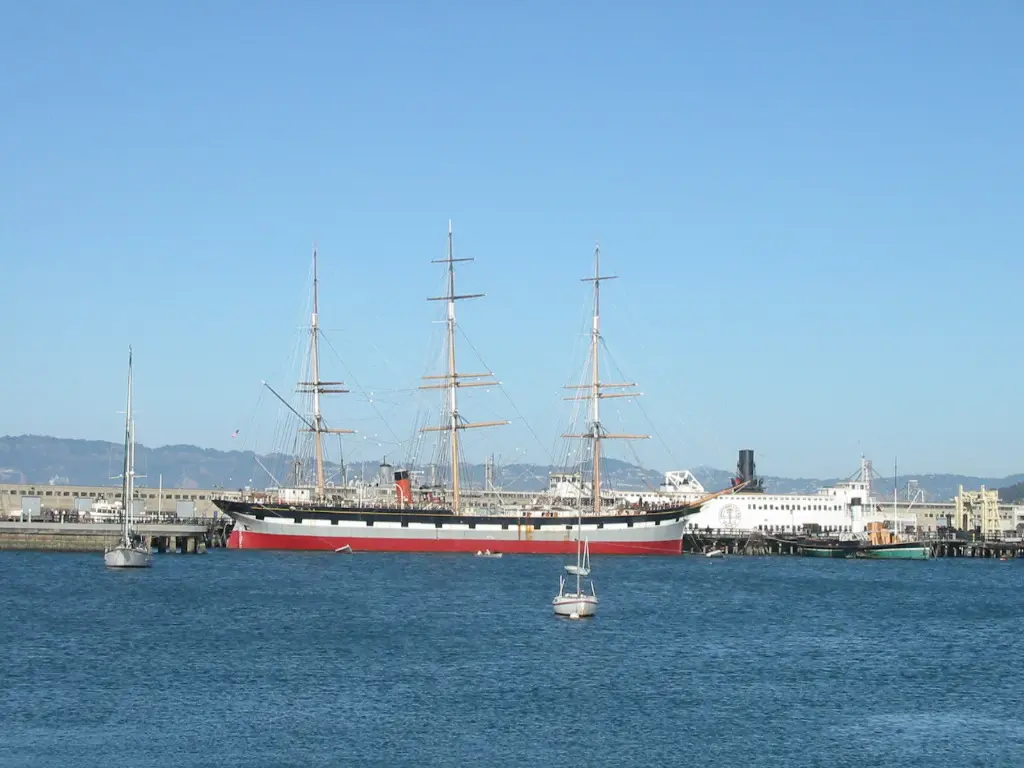
The shoreline the tour buses skip.
The route runs from Hyde Street Pier west along the water through Aquatic Park, Ghirardelli Square, and Fort Mason, out to the Wave Organ on the Marina jetty, and ends at the Palace of Fine Arts. About two and a half miles, all flat, with the bay on your right the whole way. Allow two to three hours.
The waterfront is windy and cool even on warm days, so bring a layer. The Wave Organ is loudest at high tide. Each stop below is a pin in the free SFGuide app, with directions and a short audio note.

Hyde Street Pier
The center of the San Francisco Maritime National Historical Park, with a fleet of historic ships including the Balclutha, a steel-hulled square-rigger built in Scotland in 1886 that rounded Cape Horn, and the 1890 ferry Eureka. Before the bridges opened in the 1930s, this was a working ferry slip. The pier is free to walk; boarding the ships charges a fee.
Aquatic Park Bathhouse & Maritime Museum
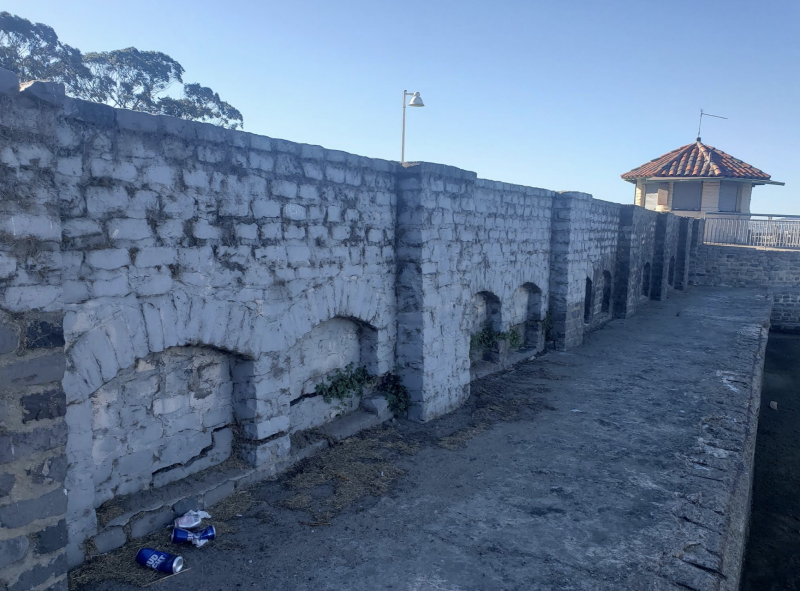
The white building shaped like a ship at the foot of Polk Street, a 1939 WPA project in Streamline Moderne style, now the Maritime Museum with undersea murals by Hilaire Hiler inside. The cove in front is a protected swimming area where Dolphin Club and South End Rowing Club members swim year-round without wetsuits. Watch from the bleachers or the curved pier.
Ghirardelli Square
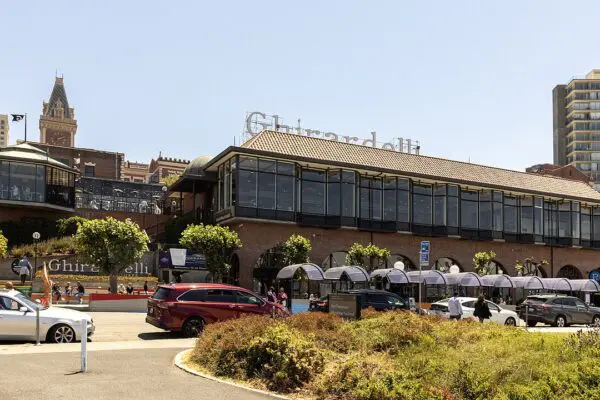
The red-brick factory complex where the Ghirardelli Chocolate Company, founded by Italian immigrant Domingo Ghirardelli in 1852, made chocolate until 1962. A group led by William Matson Roth then converted it into one of the first adaptive-reuse retail centers in the country. The rooftop sign is a landmark, and the original ice cream and chocolate shop still operates inside.
Fort Mason
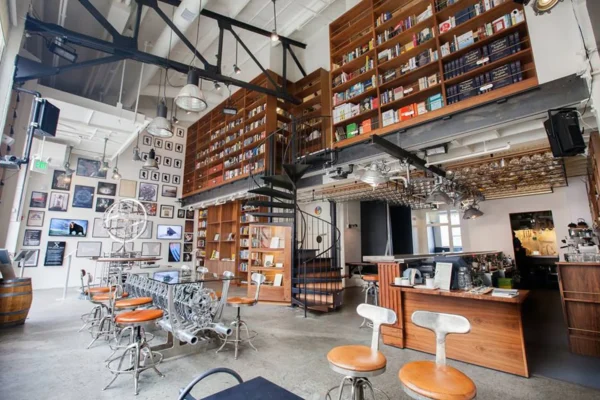
The army port that shipped more than 1.5 million soldiers to the Pacific in World War II. The army left in the 1960s and the post joined the Golden Gate National Recreation Area; the lower piers now hold the Fort Mason Center for Arts and Culture, galleries, theaters, and the long-running vegetarian restaurant Greens. The upper meadow has bay and bridge views.
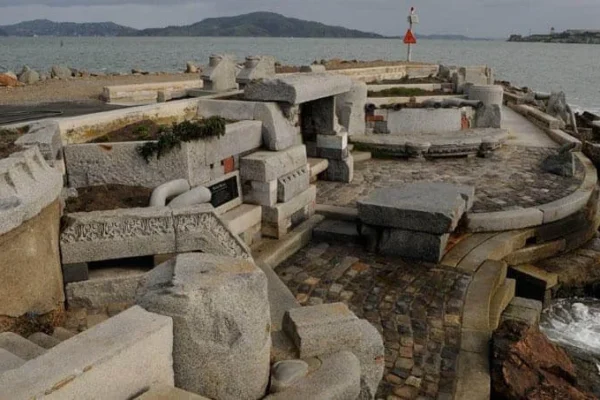
The Wave Organ
A sound sculpture built in 1986 by the Exploratorium from carved granite and marble salvaged from a demolished cemetery. Twenty-five pipes run into the bay at different depths; waves push air through them in gurgles, hisses, and low hums. The sound is subtle and best at high tide. The jetty walk out gives views of the city, the bridge, and your final stop’s dome.
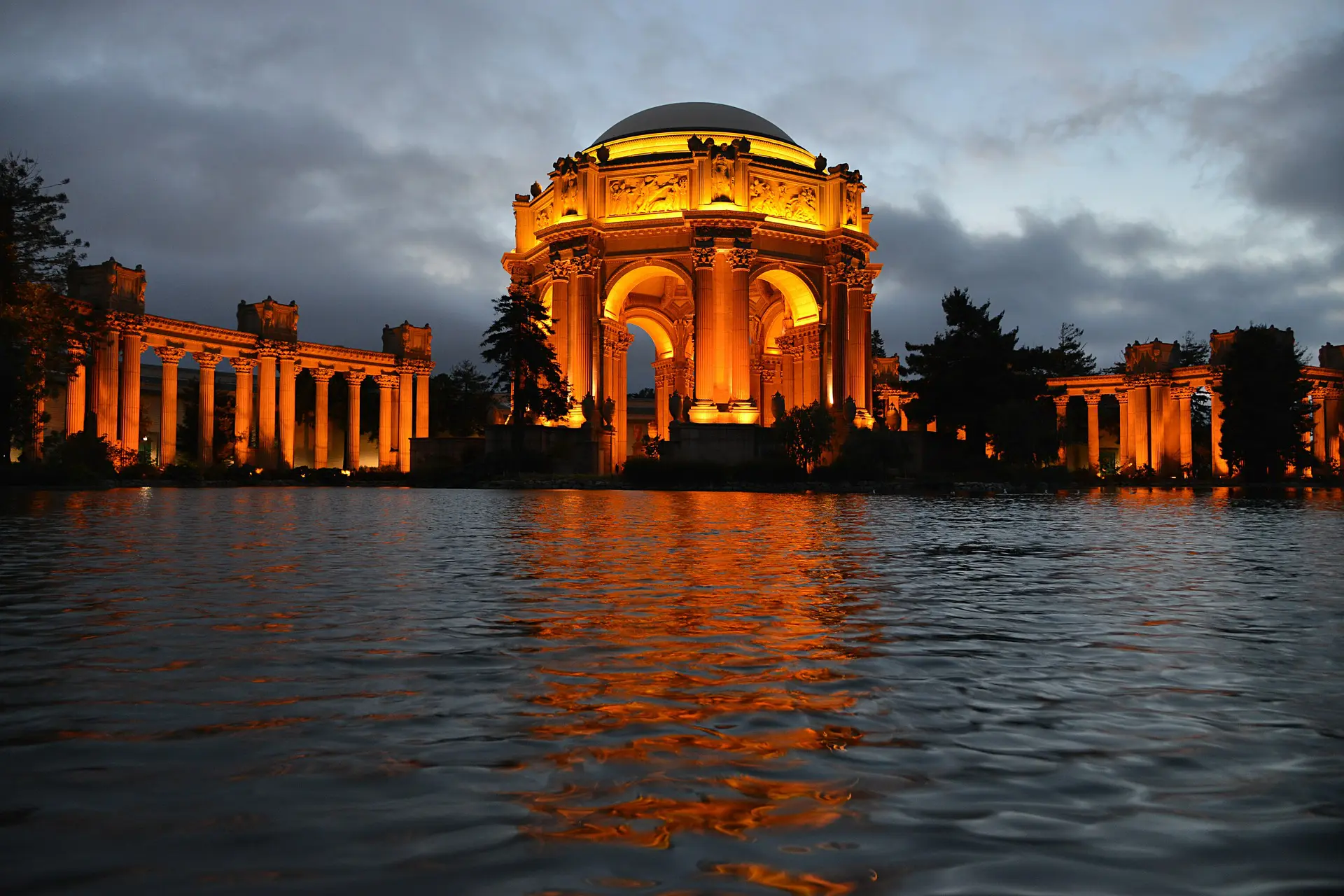
Palace of Fine Arts
The only surviving structure from the 1915 Panama-Pacific International Exposition, the fair that announced the city’s recovery from 1906. Bernard Maybeck designed it as a Roman ruin reflected in a lagoon. Built as a temporary structure, it was rebuilt in permanent concrete by the 1960s. Swans and turtles in the lagoon; free and open at all hours. The 30 and 43 buses run back toward downtown.
Worth adding nearby.
One optional add-on in the app: Musée Mécanique at Pier 45, ten minutes east of the start, with more than 300 working antique arcade machines. Free to enter; the machines take quarters.
Before you go.
Wind and fog
The waterfront is windy and cool even on warm days. Bring a layer regardless of the forecast.
Tides
The Wave Organ works best at high tide. Check a tide chart if hearing it is a priority.
Getting there
The Powell-Hyde cable car ends at Hyde Street Pier, the first stop. The 19 Polk and 30 Stockton buses also serve the start. From the Palace of Fine Arts, the 30 and 43 run back toward downtown.
Fees
Everything on the route is free to walk. Boarding the Hyde Street Pier ships and entering the Maritime Museum exhibits charge fees.
Frequently asked.
How long does the waterfront walking tour take?+
Is it free?+
Where does it start and end?+
When should I go?+
Keep exploring.
Walk the waterfront with the guide in your pocket.
The full route, the map, and the audio for every stop, free on iOS and Android. Written by a local guide. No ads, no affiliate nonsense.