
The Fillmore:
Harlem of the West and Japantown
Before redevelopment razed it, the Fillmore was the center of Black San Francisco and a West Coast jazz capital. This walk traces that history alongside Japantown, another community reshaped by displacement, and the Victorian rows that survived.

The music history the Haight overshadows.
The tour runs from Alamo Square and the Painted Ladies north up Fillmore Street, past the Jazz Walk of Fame plaques, the moved Victorian that held the district’s after-hours jazz room, and the two live venues, to Cottage Row and Japantown. About a mile and a half, with one downhill stretch from the square. Allow two hours. This walk covers hard history honestly: a thriving Black neighborhood was demolished by redevelopment, and Japantown was emptied by wartime internment.
An afternoon walk that ends with an evening show at The Fillmore or the Boom Boom Room works well. Each stop below is a pin in the free SFGuide app, with directions and a short audio note.
Alamo Square & the Painted Ladies
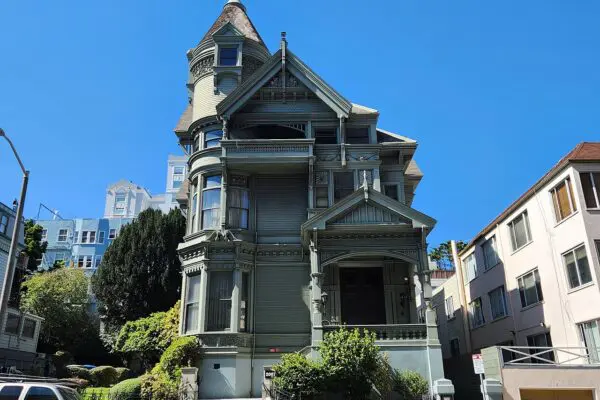
The hilltop park behind the row of six matching Queen Annes built between 1892 and 1896, photographed against the downtown skyline and famous from the opening of Full House. The park sheltered refugees after the 1906 earthquake. Best view from the top of the east slope, especially late afternoon. The houses are private residences.
The Fillmore Jazz District
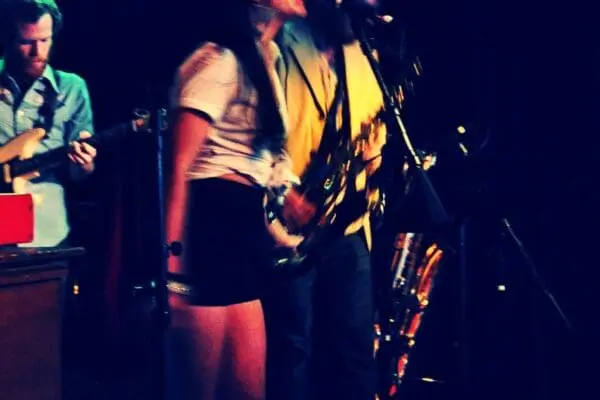
From the 1940s into the 1950s this corridor was the Harlem of the West, drawing Billie Holiday, Charlie Parker, and John Coltrane to dozens of clubs. The neighborhood filled with Black wartime workers, many in homes left empty when Japanese American residents were interned. Federal redevelopment demolished much of the district in the 1960s and 70s, displacing thousands. The sidewalk plaques of the Jazz Walk of Fame mark the lost clubs; hunt for Holiday’s and Coltrane’s as you walk north.

1712 Fillmore: Jimbo’s Bop City & Marcus Books
One moved Victorian, two histories. When it stood on Post Street it held Jimbo’s Bop City, the after-hours room where Bird, Coltrane, and Billie Holiday played for each other until dawn, 1949 to 1965. Trucked here in 1980 when redevelopment cleared Post, it became Marcus Books, the oldest Black-owned bookstore in the United States, until the San Francisco store closed in 2014. A landmark for both legacies.
The Boom Boom Room
A small, dark blues and soul club opened in 1997 and tied in its early years to John Lee Hooker, who lent it his name and held court in his booth by the door. It carries the live-music tradition on the corridor where the original clubs stood. Live blues, funk, and soul Wednesday through Saturday nights.

The Fillmore Auditorium
Opened in 1912 as a dance hall, a Black music venue in the 1950s under promoter Charles Sullivan, and from 1965 the rock hall Bill Graham made famous: the Dead, the Airplane, Joplin, Otis Redding, Hendrix. Still a working venue; the stairwell is lined with original psychedelic posters, and by tradition the staff hand out free apples at the door and a poster after most shows.
Cottage Row
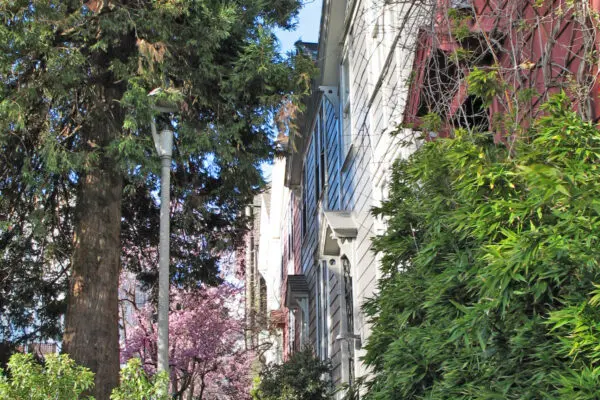
A short pedestrian lane of small wooden cottages built in 1882 as working-class housing, now a city landmark with a brick path and garden plots. Before the war, Japanese American families lived here and the lane held little market gardens. Redevelopment cleared block after block around it; this row survived. The cottages are private homes; walk the lane quietly.
Japantown & the Peace Pagoda
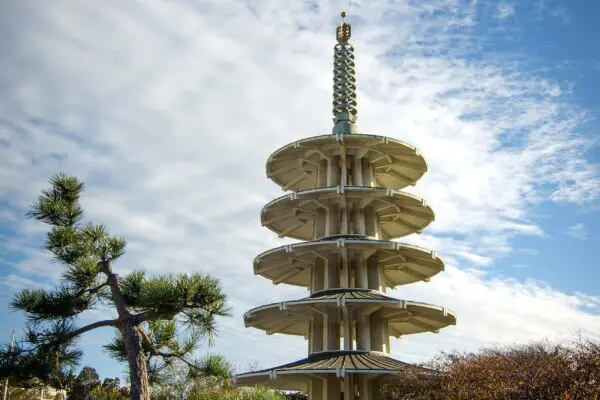
One of only three remaining Japantowns in the United States. Executive Order 9066 emptied this neighborhood in 1942; many families never returned, and postwar redevelopment reshaped what was left. The five-tiered concrete Peace Pagoda, a gift from sister city Osaka, was dedicated in 1968 and anchors the plaza. The Japan Center malls, restaurants, and bookstores surround it; the cherry blossom festival fills the streets each April. The walk ends here.
Worth adding nearby.
One optional add-on in the app: Ruth Asawa’s origami fountains on the Buchanan Mall, two bronze fountains folded like paper, cast in 1976 by the interned-as-a-teenager sculptor whose name is now on the city’s public arts high school. Steps from the Peace Pagoda; most people walk past them.
Before you go.
End with a show
The Fillmore and the Boom Boom Room are evening venues. An afternoon walk timed to a show calendar is the strongest version of this route.
Getting there
The 5 Fulton and 21 Hayes serve Alamo Square at the start. The 22 Fillmore runs the spine of the route, and the 38 Geary reaches the Fillmore Auditorium from downtown in about 15 minutes.
Seasons
Japantown is liveliest during the April cherry blossom festival, and the Fillmore Jazz Festival fills the corridor over the July 4th weekend.
Terrain
One hill: the descent from Alamo Square at the start. The rest of the route is gentle.
Frequently asked.
How long does the Fillmore walking tour take?+
Is it free?+
Where does it start and end?+
Can I end with a show?+
Keep exploring.

Walk the Fillmore with the guide in your pocket.
The full route, the map, and the audio for every stop, free on iOS and Android. Written by a local guide. No ads, no affiliate nonsense.