
SF Supervisors Advance the SHADE Act, Which Ends Shadow as a Standalone Reason to Appeal New Buildings
Update, October 28, 2026: Mayor Daniel Lurie signed the SHADE Act on Friday, October 23, his office announced. The signed law removes shadow analysis from local CEQA review while the Planning Department still evaluates shadows on city parks, cuts the appeal window for local CEQA determinations from 30 to 15 days, eliminates three types of CEQA appeals, and requires the Board of Supervisors to act on a CEQA appeal within 14 days of the hearing. The mayor’s office said it could save three to nine months on some environmental reviews and up to $25,000 per project. On the 30-day timeline described below, it takes effect around November 22.
San Francisco is one vote away from dropping shadows as a standalone reason to appeal new buildings. On Tuesday, October 6, the Board of Supervisors approved Supervisor Bilal Mahmood’s SHADE Act 10-1 on first reading, with Supervisor Connie Chan voting no, Mission Local and Le Petit Journal San Francisco reported. SHADE stands for Slashing Housing Appeals and Delays Everywhere.
What the Law Changes
The change is in how San Francisco carries out the California Environmental Quality Act. State law does not require a shadow analysis, but the city has required one as part of its own environmental review. Under the SHADE Act, shadow is no longer treated as an environmental impact on its own, so it cannot by itself support a CEQA appeal, Le Petit Journal reported.
The law also cuts the time to file certain appeals in half. Appeals to the Board of Supervisors of CEQA exemptions, negative declarations and environmental impact reports would have to be filed within 15 days instead of 30, per Le Petit Journal. It also removes Planning Commission public hearings on environmental impact reports (written comments are still accepted) and drops other steps that state law does not require. It applies to every project that goes through CEQA in the city, not only housing.
Parks Keep Their Protection
Shade on city parks is still reviewed. Developers must still provide a shadow analysis for any building that would shade a city park, Mahmood told Mission Local. Proposition K, the 1984 Sunlight Ordinance in Planning Code Section 295, is unchanged: a building over 40 feet that would cast shadow on Recreation and Park Department property still needs Planning Commission approval, according to Le Petit Journal.
Why Mahmood Wrote It
Mahmood said shade-related appeals have slowed more than 2,000 housing units since 2017. Mission Local reported the figure as spread across a dozen projects; Le Petit Journal gave 2,195 units across 11 projects. He cited 469 Stevenson Street in SoMa, a 495-unit proposal on a parking lot that the Board rejected in 2021, with shadow on Mint Plaza among the concerns. The site was still a parking lot as of March 2026, Le Petit Journal reported.
A city planner offered a narrower picture: of 18 projects in the past six years that faced appeals mentioning shade, shadow was not the main reason in 14, Mission Local reported. Planning Department staff supported the legislation. Co-sponsors are Supervisors Matt Dorsey, Danny Sauter and Myrna Melgar, per Le Petit Journal.
Who Opposed It
Bridget Maley of Neighborhoods United SF told Mission Local the shorter appeal window limits the public’s voice in environmental review. The Telegraph Hill Dwellers wrote in opposition, arguing the change conflicts with Proposition M, the 1986 measure that protects sunlight on parks and open space, Le Petit Journal reported.
What Happens Next
The Land Use and Transportation Committee forwarded the bill 3-0 on September 28. After the full Board’s second-reading vote, which had not been scheduled as of October 7, Mayor Daniel Lurie has 10 days to sign or veto it, and the law takes effect 30 days after signing, Le Petit Journal reported. On that schedule, it would first apply to projects in late November 2026 at the earliest.
The vote came the same day the Board passed a 45-day pause on new data centers.
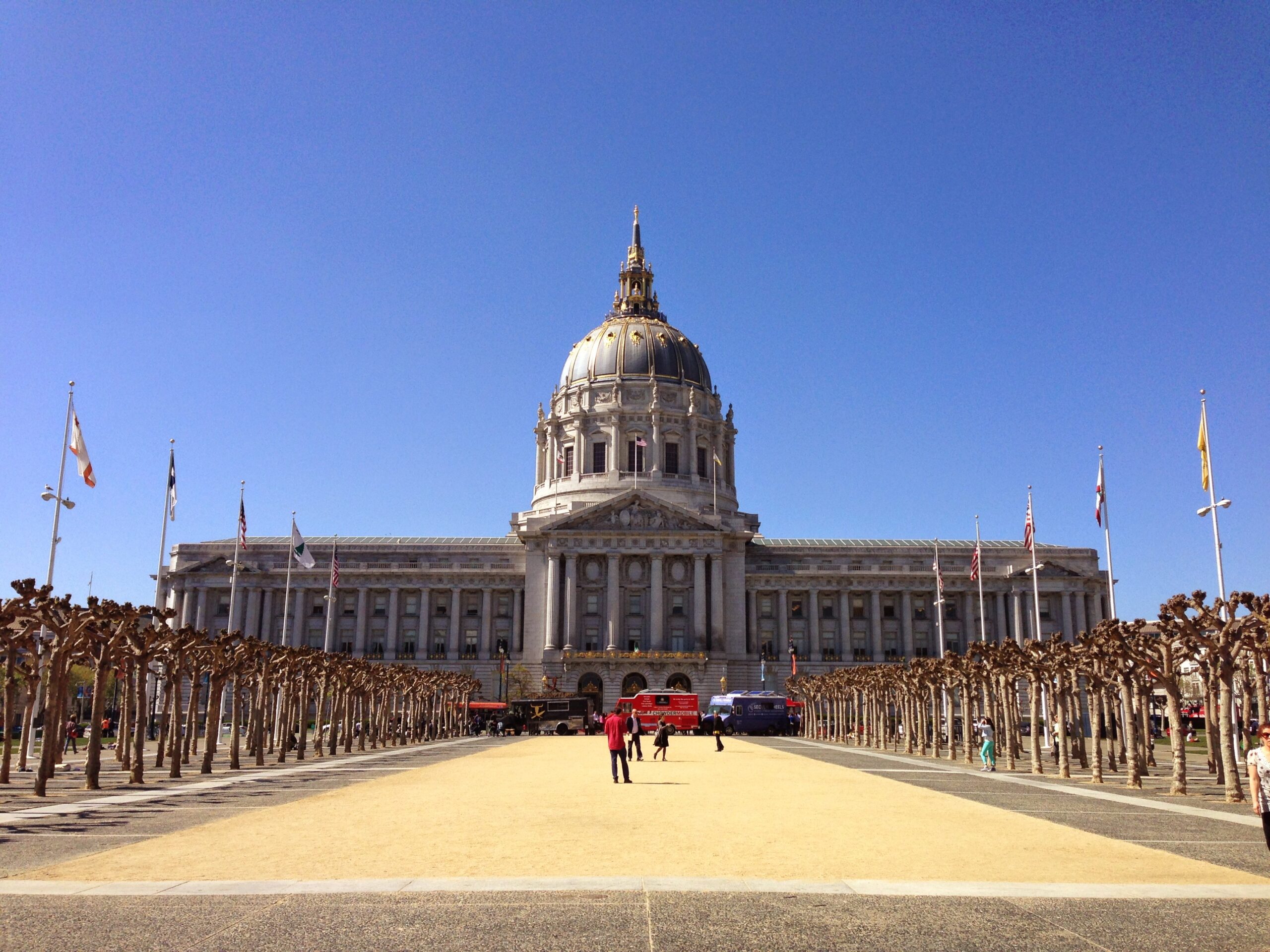
Photo: bryan…, CC BY-SA 2.0, via Wikimedia Commons.
More SF News
 San Francisco Signal Will Open Its First Home Season January 10 at Bill Graham Civic AuditoriumNov 7, 2026
 How SF Artists Can Qualify for 93 Affordable Apartments at 1687 Market StreetNov 7, 2026
 California’s Great America Will Close After Labor Day 2027, Making Next Season Its LastNov 7, 2026
 Castro Muni Station’s New Four-Stop Elevator Opens, Adding Street-Level Access From Market StreetNov 6, 2026