
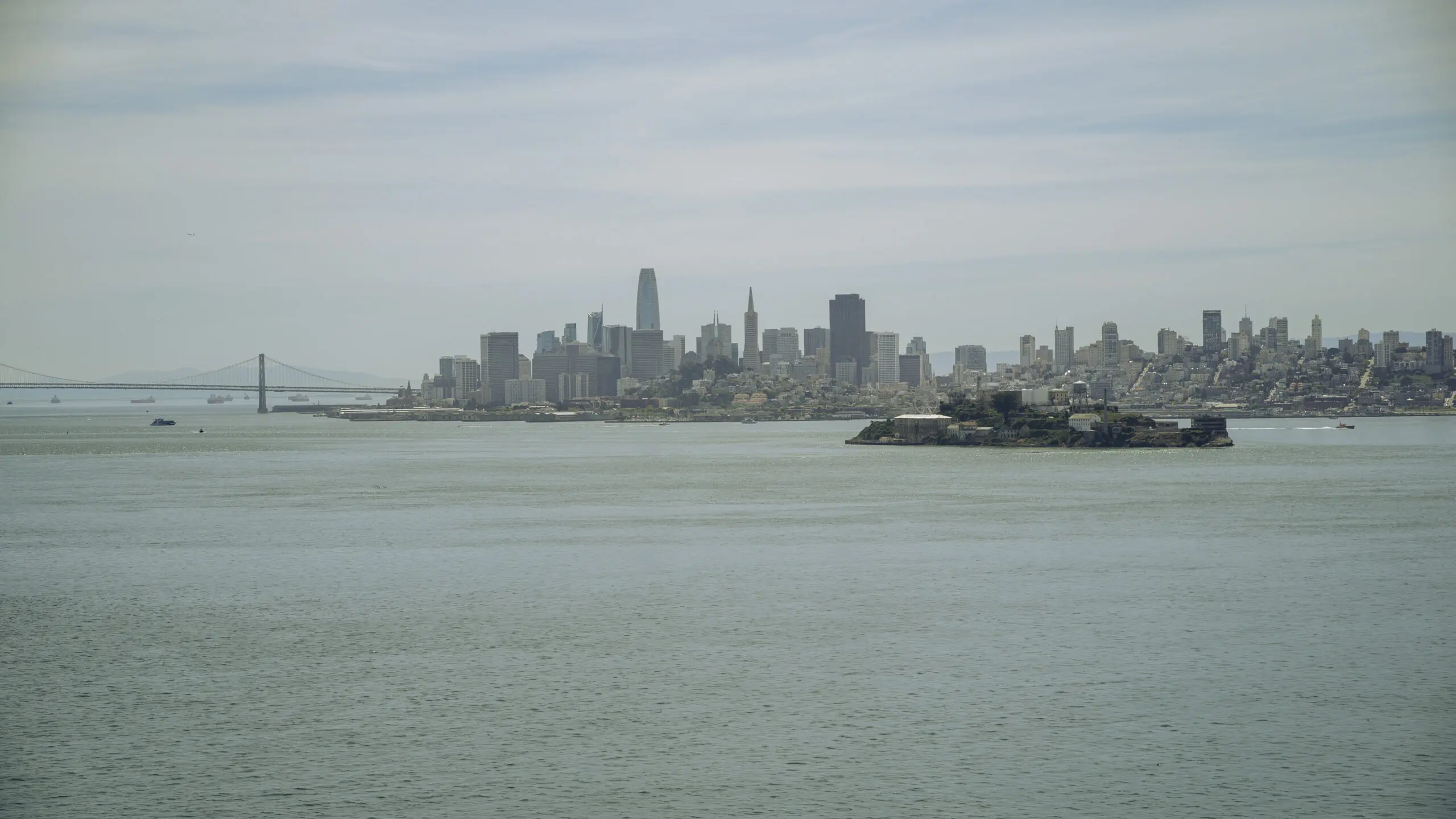
San Francisco packs its main sights into a compact, hilly peninsula. This guide covers the attractions most first-time visitors come for, with the practical details for each: where it is, what it costs, and how to get there.
Golden Gate Bridge
The Golden Gate Bridge opened in 1937 and runs about 1.7 miles across the strait between San Francisco and Marin County. Walking or biking across is free, and the pedestrian walkway on the east side is open during daylight hours. The Welcome Center on the San Francisco side has parking and a view of the south tower. Fog is common on summer mornings and often clears by afternoon.
Alcatraz Island
Alcatraz held a federal prison from 1934 to 1963 and is now part of the Golden Gate National Recreation Area. Ferries run from Pier 33 through Alcatraz City Cruises, the park’s official ferry operator, and the price includes the audio tour of the cellhouse. Adult day tickets run about $48. Tickets are released up to 90 days ahead and sell out in summer, so book early.
Cable Cars
San Francisco runs three cable car lines: Powell-Hyde, Powell-Mason, and California Street. The Powell lines climb from Union Square over Nob Hill toward Fisherman’s Wharf. A single ride is $12 as of 2026. You can board at a turnaround or at any stop along the route.
Fisherman’s Wharf and Pier 39
Fisherman’s Wharf is a waterfront district with seafood stands, the Musee Mecanique arcade, and historic ships at Hyde Street Pier. At Pier 39, a colony of California sea lions hauls out on the floating docks at K-Dock; the numbers are highest in winter. The area is walkable from the Powell-Hyde and Powell-Mason cable car ends.
Golden Gate Park
Golden Gate Park runs about three miles from the Haight to Ocean Beach. Inside it are the de Young Museum, the California Academy of Sciences, the Japanese Tea Garden, the Conservatory of Flowers, and the San Francisco Botanical Garden. See our guide to San Francisco museums for the de Young and the Academy.
Painted Ladies and Alamo Square
The row of Victorian houses on Steiner Street facing Alamo Square Park is known as the Painted Ladies, built in the 1890s. The view pairs the Victorians in front with the downtown skyline behind. The park is free and open during the day.
Lombard Street
The crooked block of Lombard Street on Russian Hill has eight brick switchbacks built in 1922. You can walk the stairs on either side or drive down one-way from Hyde Street. See our Lombard Street guide for details.
Coit Tower
Coit Tower stands on Telegraph Hill above North Beach. The lobby holds 1930s Works Progress Administration murals, and an elevator runs to an observation deck. There is an admission fee for the elevator. The Filbert and Greenwich Street steps climb the hill to the base.
Chinatown
San Francisco’s Chinatown is one of the oldest in North America. The Dragon Gate at Grant Avenue and Bush Street marks the southern entrance, and the streets hold temples, bakeries, and dim sum rooms. See our Chinatown dim sum guide for where to eat.
The Ferry Building
The Ferry Building on the Embarcadero opened in 1898 and reopened as a food marketplace in 2003. The hall has vendors and restaurants, and the plaza outside hosts a farmers market on Tuesdays, Thursdays, and Saturdays. Ferries still run from behind the building to Marin and the East Bay.
Getting Around
Many of these sights connect by Muni and cable car, and a Clipper card or the MuniMobile app covers fares. Driving and parking downtown and near Fisherman’s Wharf are difficult, so transit is often the easier choice. For dated listings, see our guide to things to do in San Francisco this month.