
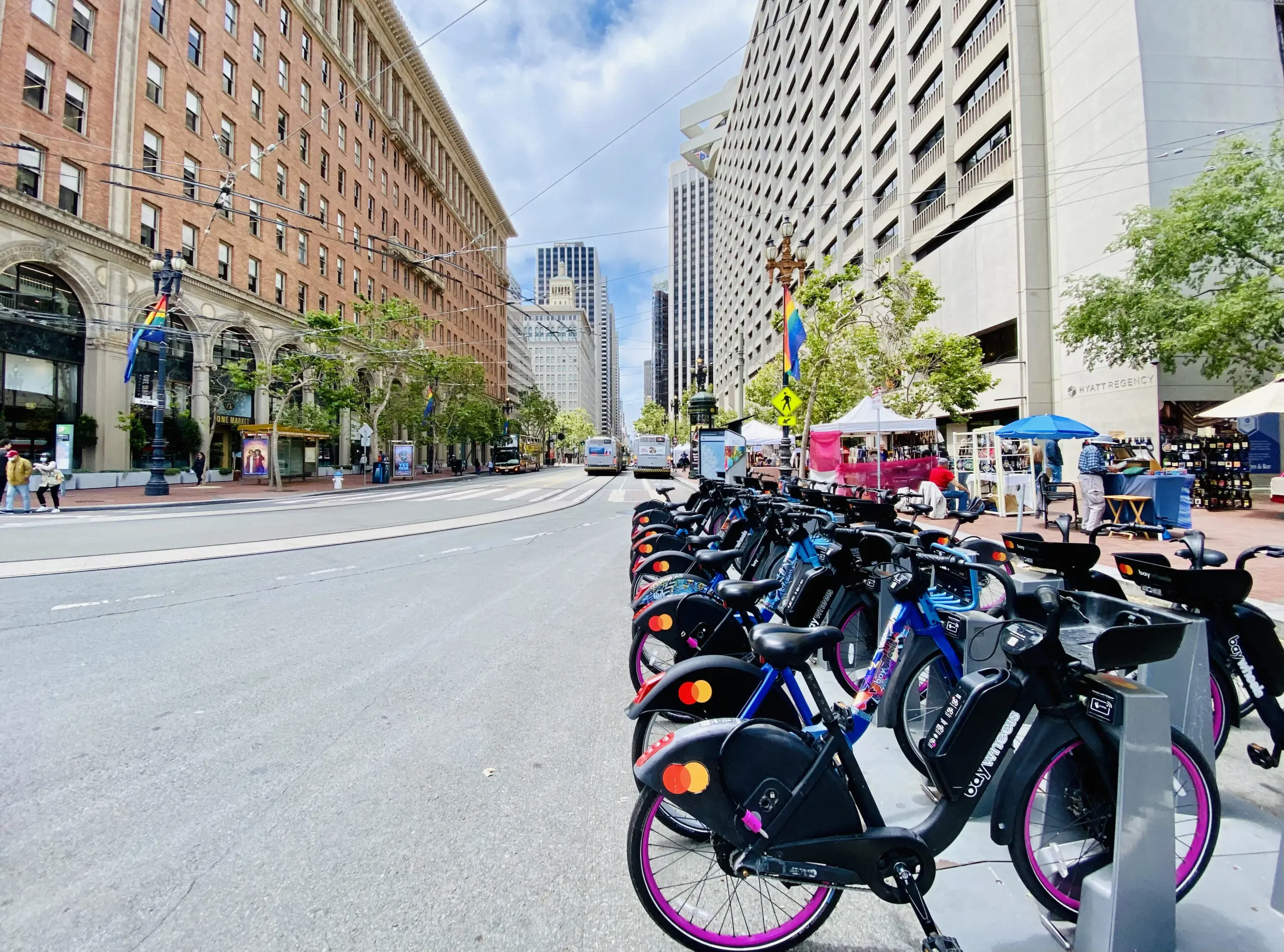
San Francisco Bikeshare Tops 4 Million Trips in 2026: Prices, Top Routes and the New Beach Street Bikeway
San Francisco riders have taken more than 4 million Lyft Bike trips so far in 2026, passing the system’s previous annual record of nearly 4 million trips, set in 2025, with three months of the year still to go. The San Francisco Municipal Transportation Agency (SFMTA) announced the figure on Monday, October 26, 2026, alongside the opening of a two-way separated bikeway on Beach Street in Fisherman’s Wharf.
The bikeshare system, known as Bay Wheels until it took the Lyft Bike name, has 364 stations in the city and links riders to Muni, BART and Caltrain. Here is what the new numbers show, what a ride costs, and what changed on the waterfront.
What the 2026 numbers show
- More than 4 million trips in San Francisco in 2026 through late October, according to the SFMTA.
- Roughly triple the 2018 total. Riders took 1.3 million trips in 2018, the system’s first full year.
- Half a million trips a month. June 2026 was the first month above 500,000 trips, and every month since has stayed above that level.
- More commuting by bike overall. The city’s bike counts, which include personal bikes, show morning and evening commute cycling rose 52 percent in 2025 compared with 2024.
- Reduced-cost riders. Members of the Bikeshare for All program took nearly 200,000 trips in 2025 and have already passed that number in 2026.
“Lyft Bike is connecting more people than ever to transit, jobs and neighborhoods across San Francisco,” SFMTA Director of Transportation Julie Kirschbaum said in the announcement.
Where people ride
The station at 4th and Townsend streets, outside the Caltrain depot, logs more trips than any other in the system, and four of its top five stations sit at major transit hubs such as BART and Caltrain stops. The SFMTA lists the Panhandle, the Marina, Cow Hollow, the Mission, North Beach and the Polk Street corridor as heavy commute areas, and says Financial District stations fill quickly during the morning rush.
For visitors, the route that matters is the Embarcadero. The SFMTA says the stretch between Fisherman’s Wharf and the Ferry Building ranks among the system’s high-traffic routes, and that ridership there has grown since Alioto’s Plaza and other waterfront improvements opened. The agency also credits the Embarcadero Bikeway with cutting sidewalk riding along the waterfront by about 70 percent.
The new Beach Street bikeway
Supervisors Danny Sauter and Stephen Sherrill, SFMTA Streets Director Viktoriya Wise and Lyft Senior Policy Manager Laura Krull opened the Beach Street quick-build with the October 26 announcement. According to the SFMTA project page, the changes cover the Beach Street corridor between The Embarcadero and Polk Street:
- A two-way separated bikeway on the north side of Beach Street between Van Ness Avenue and Columbus Avenue.
- Upgraded crosswalks, advance limit lines, daylighted corners, a painted safety zone and a new stop sign.
- New loading zones, blue (accessible) zones and parking spaces.
- A realigned 19 Polk stop in front of Aquatic Park, moved to line up with the bus shelter.
The corridor is also served by the F Market & Wharves streetcar, the Powell-Hyde cable car and the L Owl bus. The SFMTA plans to evaluate the project within its first 24 months and use the results to decide on near-term changes and a long-term design. Questions go to the project team at [email protected].
What a Lyft Bike ride costs
Prices on Lyft’s San Francisco plans page as of October 27, 2026:
- Single ride: $1.00 to unlock, then $0.19 a minute on a classic bike or $0.49 a minute on an e-bike.
- Day pass, $15: unlimited classic-bike rides of up to 30 minutes each within 24 hours. Time past 30 minutes costs $0.19 a minute, and e-bike rides cost $0.49 a minute.
- Month pass, $29.
- Annual Lyft Bike membership, $165: unlimited 45-minute classic-bike rides, $0 unlocks and reduced e-bike prices.
- Bikeshare for All, $5: a reduced-cost membership for qualifying residents, which Lyft is now expanding to Medi-Cal recipients.
On a day pass, the 30-minute limit applies to each classic-bike ride, so docking at a station and taking a fresh bike resets the clock. The SFMTA says riders can also end trips at new virtual stations set up around existing clusters of bike racks.
What comes next
Lyft, the SFMTA and the Metropolitan Transportation Commission have extended their bikeshare contract by five years, through 2032. The SFMTA says new investment has started rolling out and will continue over the next few years, and Lyft says it is adding e-bikes and stations, though the announcement does not give counts or locations.
Bikeshare sits inside the city’s wider street safety work, which pairs street design with speed reduction and enforcement. The city’s bike network covers more than 470 miles, including 50 miles of protected bikeways. For one piece of that program, see our report on the SFMTA’s 18-month speed camera results. For transit changes earlier this fall, see Muni’s August 29 service changes, and for planning a day near the waterfront, our guide to things to do in downtown San Francisco.
Sources: SFMTA press release, October 26, 2026; SFMTA Beach Street Quick-Build Project page; Lyft Bike plans and pricing.
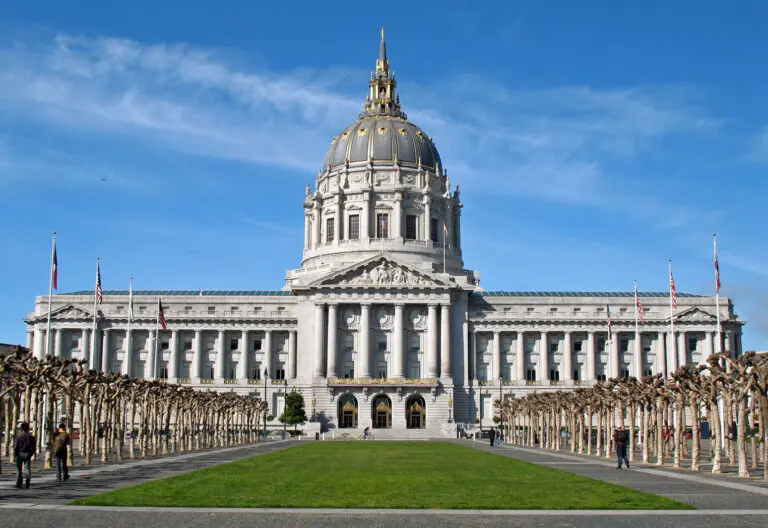
Photo: Suiren2022, CC BY-SA 4.0, via Wikimedia Commons.
More SF News
 SF Market, the Bayview’s Overnight Produce Market, Gets City Approval for a New Distribution CenterOct 29, 2026
 T&T Supermarket Opens Its First San Francisco Store November 5 at Geary and MasonicOct 28, 2026
 San Francisco Film Shoots Rose 28 Percent in a Year: What Film SF’s New Report ShowsOct 27, 2026
 How to Vote in San Francisco’s November 3 Election: City Hall Hours, 37 Drop Boxes and Mail TimingOct 26, 2026