
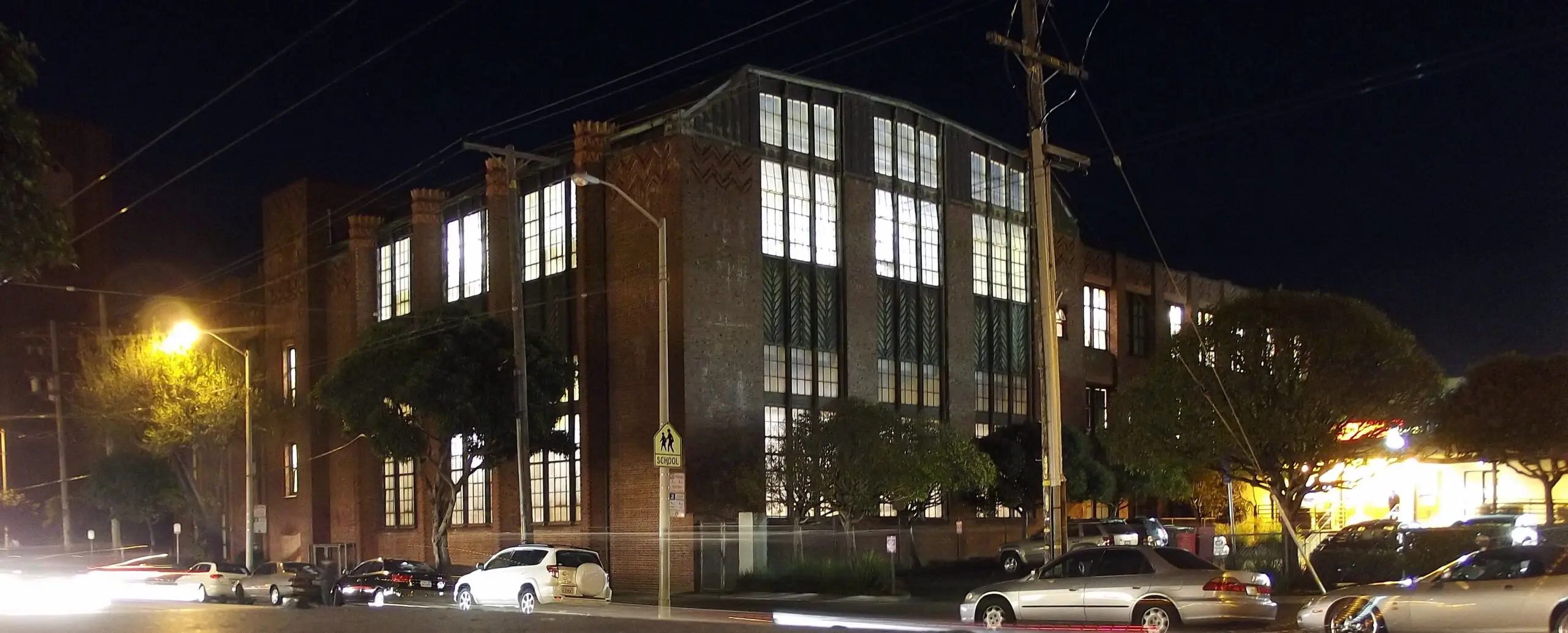
San Francisco Will Lower Speed Limits Near 230 Schools, Starting This Fall
Speed limits are dropping near every school in San Francisco. On Tuesday, July 21, the SFMTA Board of Directors approved a plan to lower limits around 230 public and private campuses over the next two years. The vote was reported by CBS Bay Area and Local News Matters.
What changes
The plan sets a new default limit of 20 mph on school streets and widens where the city can post 15 mph and 20 mph signs. Today, San Francisco school zones are posted at either 15 mph or 25 mph, so the practical effect is that the 25 mph blocks come down.
The change was made possible by Assembly Bill 382, which the California Legislature passed in 2025. The bill lowers the baseline school-zone limit from 25 mph to 20 mph statewide, standardizes what counts as a school zone, and lets a city adopt the 20 mph limit now by ordinance or resolution rather than waiting for the statewide date.
Which schools go first
SFMTA says the first signs go up before the new school year at six campuses: Dr. William L. Cobb Elementary, Leonard R. Flynn Elementary, St. Anthony-Immaculate Conception School, Jefferson Elementary, Roosevelt Middle School, and Ruth Asawa San Francisco School of the Arts. The remaining campuses follow over roughly two years.
The safety math
SFMTA cites survival rates as the reason for the 20 mph figure. On the agency’s speed management page, a pedestrian struck by a driver traveling 20 mph has about a 90 percent chance of surviving. At 40 mph, that falls to about 20 percent.
This is not the city’s first pass at school speeds. Under Assembly Bill 321, passed in 2007, San Francisco lowered limits to 15 mph at about 200 public and private schools in 2011, which SFMTA says was every school then eligible under state law.
“As families get ready for the new school year, they deserve to know that they’ll be sending their kids out to safer streets so they can get to class and back home, every day, without fear,” Mayor Daniel Lurie said.
SFUSD Superintendent Maria Su said the change is “an important step towards protecting our students, supporting our families, and creating safer streets for everyone.”
What else is coming
The agency listed more than 40 school-zone crossing improvements and daylighting at more than 2,300 school intersections, alongside crossing guards and Safe Routes to School programs. Separately, protected bike lanes and high-visibility crossings are under construction near Mission Bay Elementary School, which opens in August.
The speed-limit vote is separate from the city’s push on automated enforcement. Earlier in July, supervisors voted 10 to 1 to ask Sacramento to lift the state cap on speed cameras, which we covered in our report on the 33-camera limit.
If you drive here
Signs are the only notice you get, and they are going up on a rolling basis rather than all at once. If you rent a car in San Francisco, treat any block with a school on it as 20 mph from this fall onward, and watch for the yellow school-zone signs on residential streets in the Mission, the Richmond, and the Sunset, where several of the first installations land.
Photo: Edward Betts, CC BY-SA 3.0, via Wikimedia Commons.
More SF News
 Three Rival Slates Are Competing for San Francisco’s School Board This NovemberSep 27, 2026
 Mayor Lurie’s Charter Measures Have Raised $11 Million, More Than All Others CombinedSep 27, 2026
 Fisherman’s Wharf Is Getting a New Holiday Ice Rink This NovemberSep 27, 2026San Francisco Weighs a 10 Percent Cap on Banked Rent Increases Through 2029Sep 26, 2026