San Francisco Supervisors Ask the State to Lift the 33-Camera Speed Enforcement Cap
The San Francisco Board of Supervisors voted 10 to 1 on Tuesday, July 14, 2026, to approve a resolution urging California lawmakers to let the city run more than the 33 automated speed cameras it is currently allowed. District 10 Supervisor Shamann Walton cast the only vote against.
The resolution adds no cameras on its own. It formally asks the state to revisit the cap written into Assembly Bill 645, the 2023 law that authorized a speed safety camera pilot in San Francisco, Oakland, San Jose, Los Angeles, Long Beach, and Glendale. San Francisco was the first of those cities to switch its cameras on, in March 2025.
What the first year showed
The SFMTA reported that the share of drivers traveling at least 10 miles per hour over the posted limit fell by about 79 percent at camera locations during the program’s first year. A report filed with the board’s Public Safety and Neighborhood Services Committee identifies at least 80 more locations the agency considers high-need.
Supervisor Matt Dorsey, who introduced the resolution, represents District 6, which has seven of the 33 cameras, most of them in SoMa, and records the highest number of crashes involving injuries or deaths in the city. The resolution asks the state to prioritize corridors on San Francisco’s High Injury Network, the 12 percent of city streets where more than 68 percent of severe and fatal crashes occur.
Walk San Francisco, the pedestrian advocacy group that spent roughly eight years pushing for the state legislation, called the resolution a first step. Executive director Jodie Medeiros said 33 cameras is not enough for drivers to treat San Francisco as a safe-speed city.
What it means if you drive here
Nothing changes today. The 33 cameras stay where they are, and any expansion would require action in Sacramento. Under AB 645, citations are issued by mail to the registered owner and do not add points to a driver’s license, and cameras only trigger at 11 miles per hour or more over the limit. Camera corridors are signed. The SFMTA publishes current locations and citation details on its speed safety camera pages.
If you are visiting and plan to drive, the practical note is that the marked corridors are concentrated on the High Injury Network, which includes several streets visitors use often, among them stretches in SoMa. Our things to do in San Francisco guide covers transit alternatives for most of the main sights.
Program data from the SFMTA and Walk San Francisco. The July 14 resolution was reported by Mission Local.
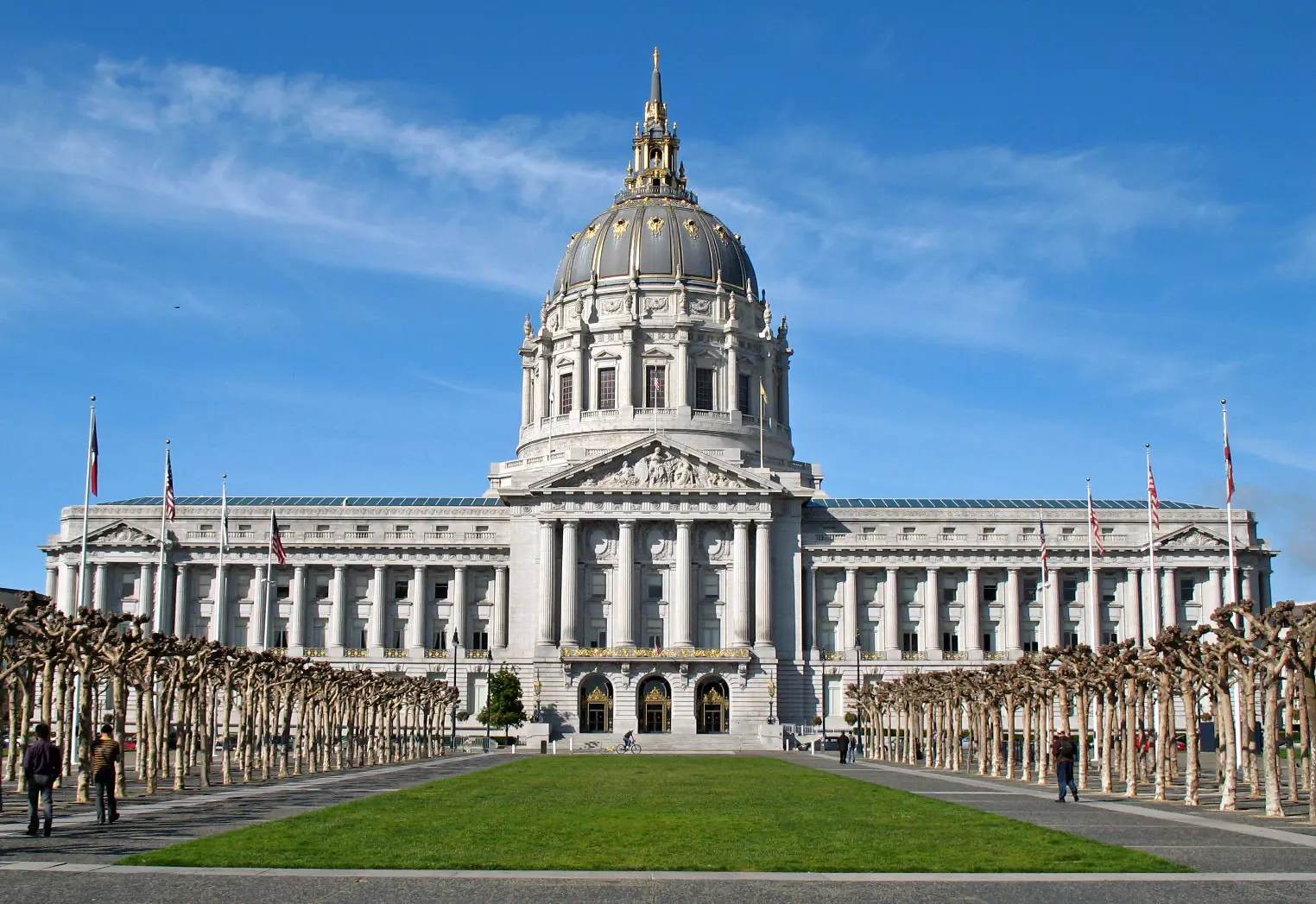
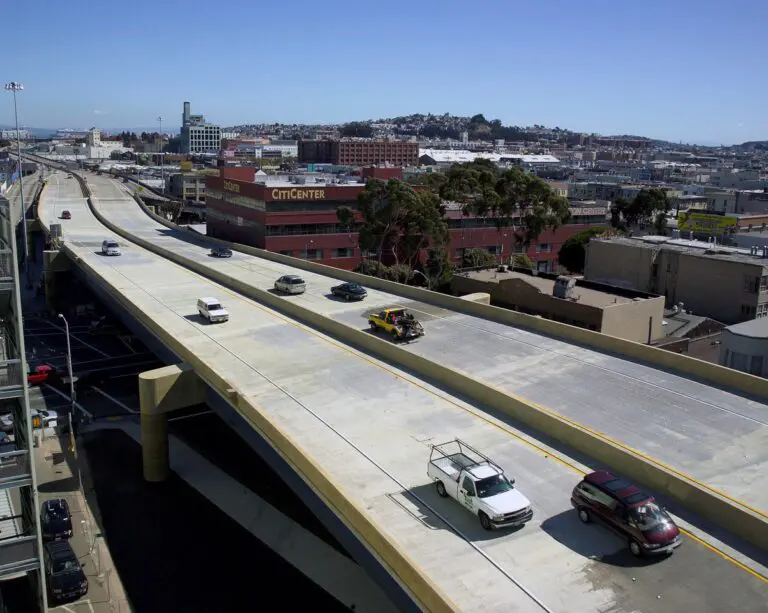
Photo: Sanfranman59, CC BY-SA 3.0, via Wikimedia Commons.
More SF News
 Embarcadero Park Pavilion: Three Designs Go to the Arts Commission October 19Oct 18, 2026
 San Francisco Speed Cameras Cut Excess Speeding 84 Percent in 18 Months, SFMTA Report SaysOct 17, 2026
 Westbound I-80 Closes Through SoMa October 23 to 26 for Bayshore Viaduct WorkOct 17, 2026
 Highway 37 Closes Both Ways Between Vallejo and Sears Point October 23 to 26 for El Niño WorkOct 16, 2026