
SB 79 Took Effect July 1: Taller Housing Is Now Allowed Near San Francisco Transit Stops
SB 79, a state housing law signed by Governor Gavin Newsom on October 10, 2025, took effect inside incorporated cities on July 1, 2026. The law allows higher-density residential buildings within about half a mile of major transit stops, meaning rail stations and major bus stops. San Francisco is one of eight counties where it applies.
What the Law Does
SB 79 sets baseline height and density standards near transit that apply even where local zoning is more restrictive. It covers “urban transit counties,” defined as counties with 15 or more passenger rail stations. Eight qualify: San Francisco, Alameda, San Mateo, Santa Clara, Sacramento, Los Angeles, Orange, and San Diego.
Projects that use the law have to meet several conditions. Roughly 7 to 13 percent of new homes must be affordable to lower-income households, depending on the project. Eligible projects need at least five units, built at a density of at least 30 units per acre or the applicable zoning minimum. Average unit size is capped at about 1,750 net habitable square feet.
What Cities Can Still Decide
The law leaves local governments some room. Cities can exempt certain sites, or adopt their own transit-oriented development plans in place of the state standards, as long as those plans allow at least as much overall development and are approved by the California Department of Housing and Community Development.
What It Means in San Francisco
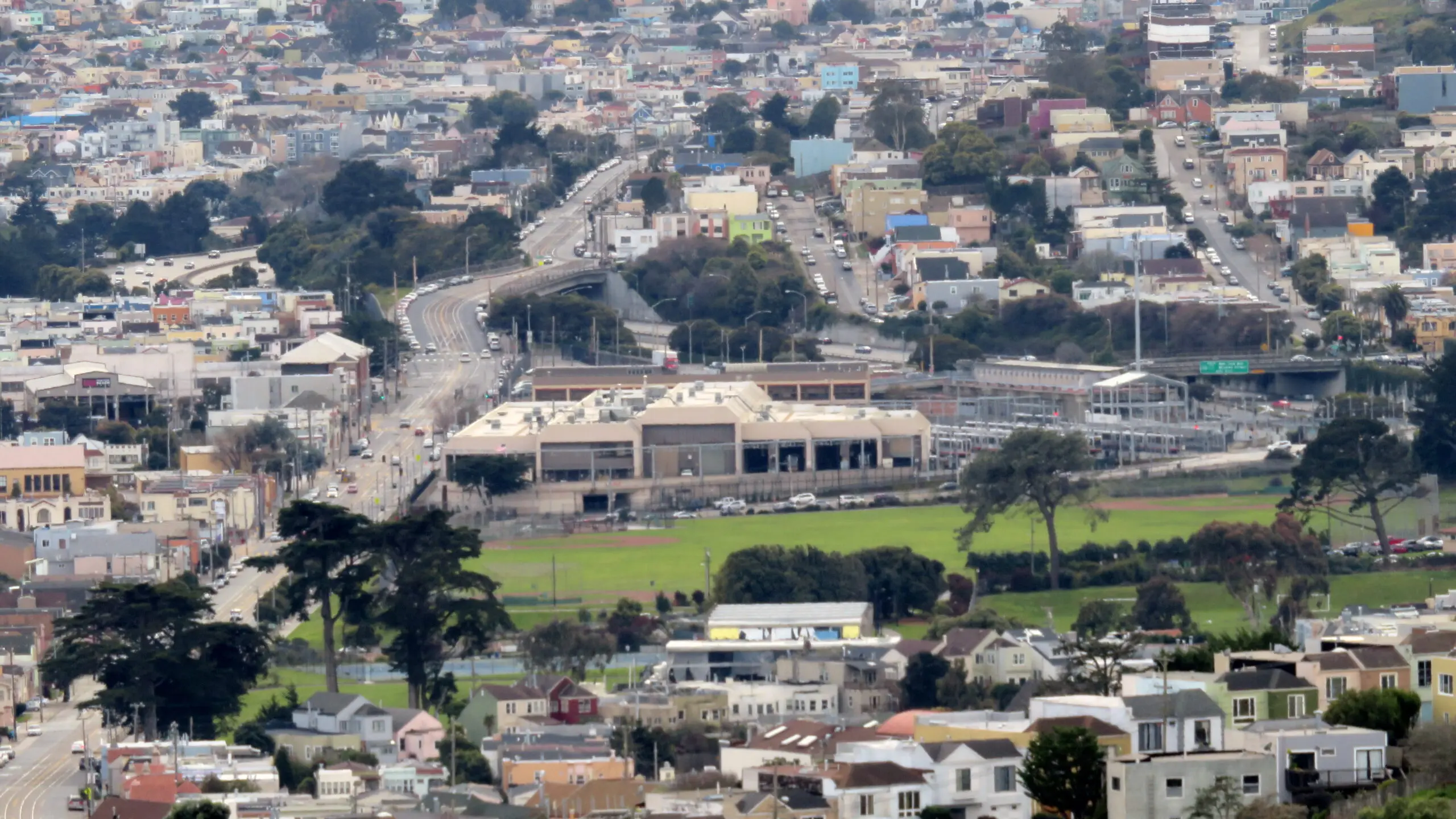
In San Francisco, the affected areas are the blocks within about half a mile of BART stations, Muni Metro stations, and major bus stops. That covers a large share of the city. The law changes what property owners are allowed to propose on those blocks, not what gets built; individual projects still have to pencil out and go through permitting.
The full text of the law, including its height, density and affordability standards, is published by the California Legislature as SB 79, Housing development: transit-oriented development. CalMatters has followed the rollout since the law passed and has more detail on how cities across the state are responding.
Photo: Pi.1415926535, CC BY-SA 3.0, via Wikimedia Commons.
More SF News
 Ken Kesey’s Original Furthur Bus Is on Display in Golden Gate Park Through October 25Sep 8, 2026
 The Golden Gate Dozen Links 12 San Francisco National Park Sites in One 13-Mile RouteSep 7, 2026
 Muni Heritage Weekend Returns September 19 and 20 With Free Rides on Historic StreetcarsSep 7, 2026
 Cole Valley Is Getting Pasta Supply Co, a New Sushi Restaurant, and an Antique StoreSep 5, 2026